The title of this post comes from the well known football chant usually aimed at a teams manager by the opposition supporters (it’s a given during every game for my team)
However I wanted a title to go with a short story that I found during my research into a new audio walking tour of Bermondsey that I’ve published.
It concerns an area known as Shad Thames. Today a very ornate Victorian style shopping street, lined with converted warehouses and overhead bridges.
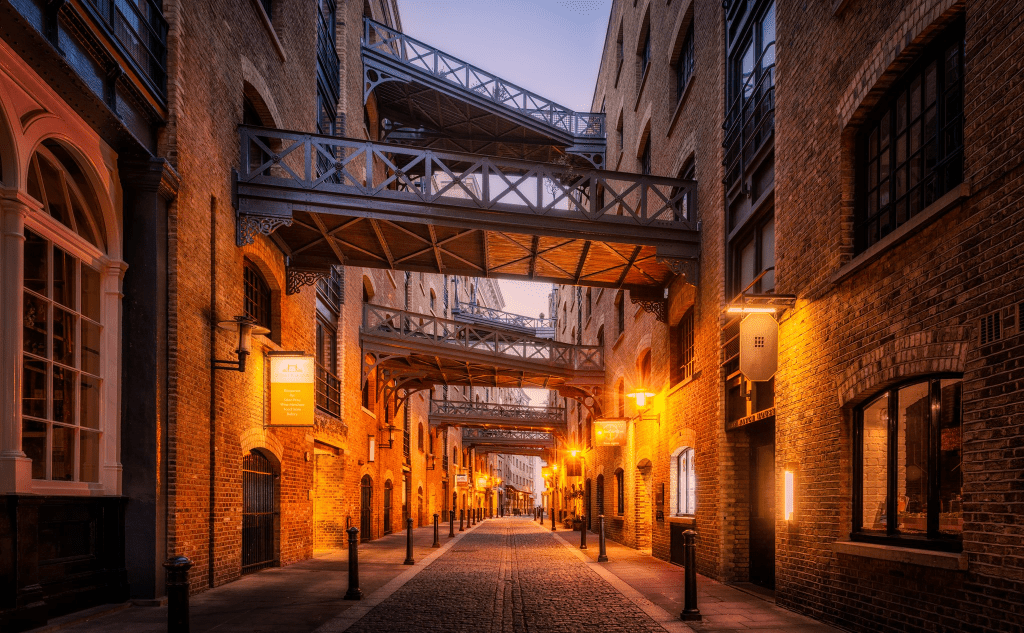
But put yourself in the shoes of a worker here two hundred years ago and the reality would have been starkly different. Gone would be the shops some of which I’m still not certain what they sell, no coffee shops, restaurants, no media companies or boutiques.
The air was thick with the smell of spices, grain, rope‑tar and damp timber, all drifting from the great brick storehouses that rose in a continuous wall along the water. Barges nudged the wharves day and night, their decks piled with tea chests, sugar hogsheads, hides, hops and barrels of rum. Chains clattered, cranes creaked, and the river slapped against the steps in a slow, heavy rhythm.
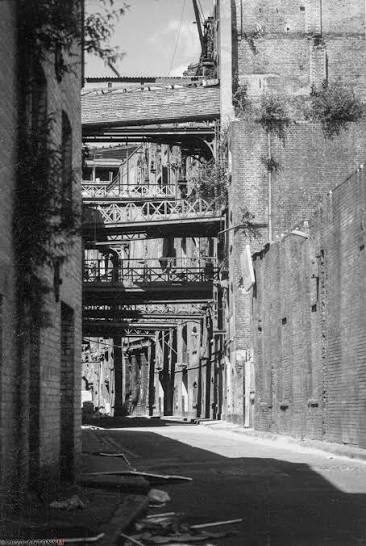
Narrow lanes ran between the warehouses, dark even at midday. Overhead, iron bridges linked building to building, carrying sacks and crates from one store to the next. Labourers moved beneath them in a steady tide, lightermen with their poles, warehousemen in aprons, porters bent under impossible loads. Their shouts echoed between the walls, swallowed quickly by the roar of the river traffic.
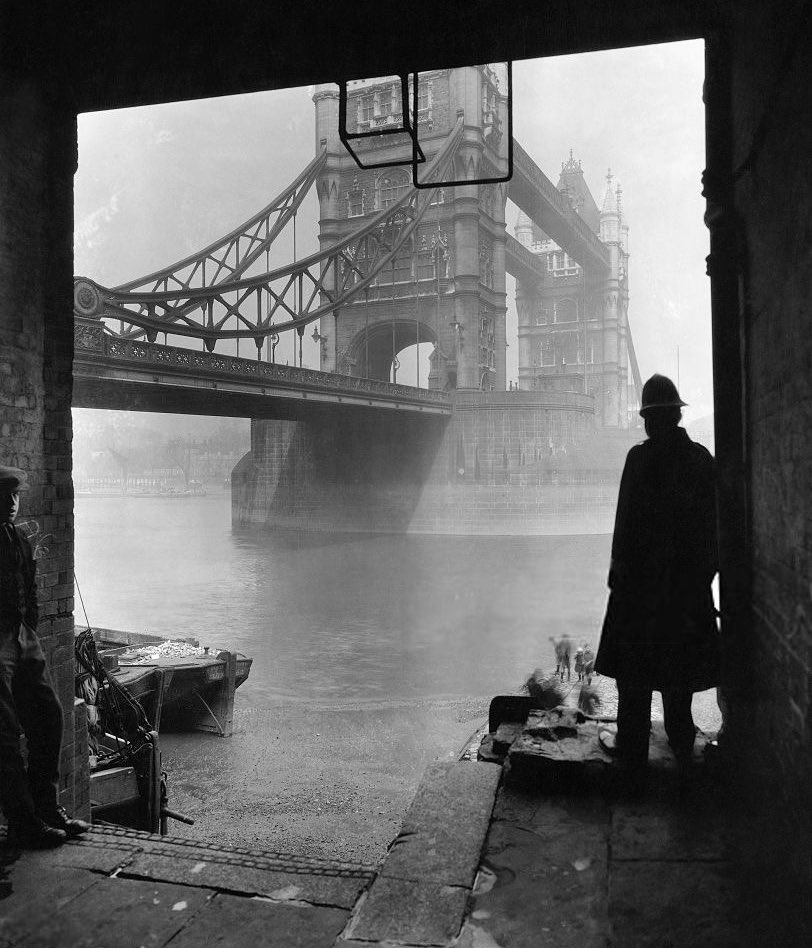
At low tide the mud stank, catching the refuse of the docks: broken rope, splintered wood, the odd dead dog. Rats thrived. So did the pubs. Every corner had one, lit by smoky lamps, filled with dockers drinking off the shift or waiting for the next call‑up of casual labour. The talk was of wages, cargoes, accidents, and the endless grind of the river.
Shad Thames was a world of work, noisy, cramped, dangerous, and alive with movement. A place where the Thames ruled everything, and where the river’s business never truly stopped. With so much valuable material passing through, the area naturally attracted a bit of criminal enterprise. Violence was rare beyond the usual tavern scraps, but opportunities for quiet pilfering were plentiful.
Magistrates’ records show many dock workers charged with theft, though most were never convicted for lack of evidence, the savvy dockers having disposed of their swag through a network of fences.
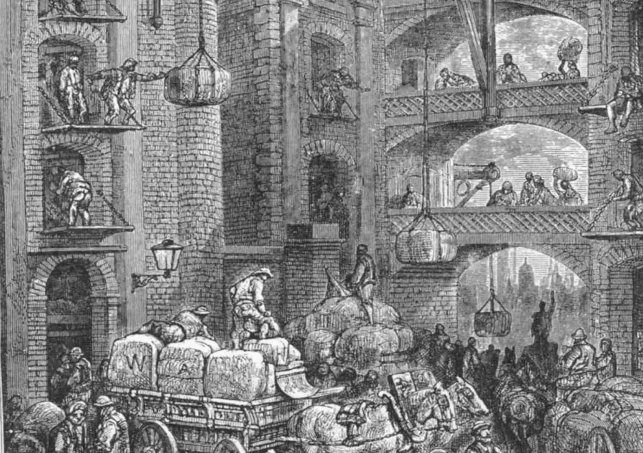
And in the midst of all this in 1812 was James Dodd, a thirty two year old foreman at the flour millers, Messers Constable. No petty thief was he, however even with such a responsible position and probably an above average wage, he couldn’t help himself from earning a bit on the side.
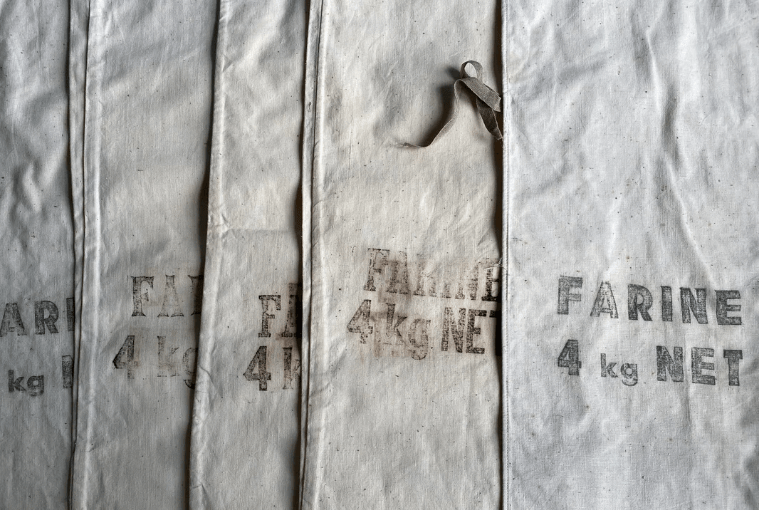
His sideline was the supply to other flour millers of empty sacks that he had purloined from his employers stock and we’re not talking about the odd dozen or so.
In a time when dock workers were hired by the day it was Dodd’s job to chose enough men to carry out the daily tasks. When a shipment of new sacks was due to be landed at the wharf, Dodd’s would chose his workers carefully. Strong experienced men were called for, not because the work was particularly difficult, but as with most foremen he realised that the quicker the job was done would mean moving onto the next task in order to get more than a full days work from the men he hired. So he would chose the requisite number of bodies to do the days work without spending more than he need, except on days when the sacks arrived. On those days he would chose one extra worker. This would usualy be someone who had not been hired before, or an inexperienced young lad or sometimes a simpleton.
Dodd’s would oversee the unloading of the sacks, but just before the last bale was due to be winched out, an accomplice would rush to Dodd’s side and inform him of a most important task that needed to be undertaken by the dockers. Dodd’s would call a halt to the unloading and send this crew off to the new task, all except the extra hired man, who we’ll refer to as the Patsy.

The Patsy was tasked with overseeing the last bale of sacks hauled from the ship and placed on a waiting cart and then told to drive the load to a warehouse in the vacinity and unload them. As this was Dodd’s store of hooky sacks it was unlikely that the unwitting driver would smell a rat, he’d just manhandle the new load in and place them by the others. The fact that he’d never be hired by Dodd’s again made sure that he’d never do this twice. He’d be paid off at the end of the day possibly with a little extra for his trouble and would have to look elsewhere for work from then on.
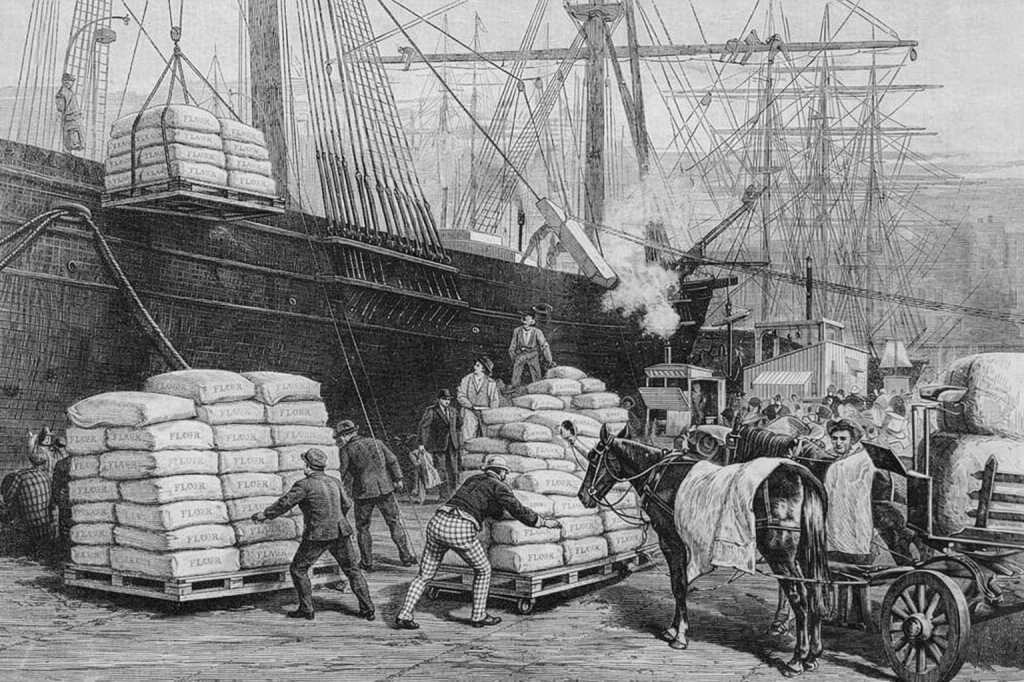
Appaently this went on for a number of years. Dodd’s accomplices were well placed, one of them being a book keeper who could easily alter the dockets relating to the supply of sacks. However, management must have suspected that something was wrong and set up a sting opperation with constables observing the modus operandi. Dodd’s was later followed to his warehouse where he was arrested. It was calculated that there were over six thousand sacks stashed and ready to be sold.

Dodd’s was found guilty at the Old Bailey of fraud and embezzlement along with three of his cronies. They were sentanced to seven years transportation to Australia.

 A LONDON MISCELLANY
Well, what a tale! I wish I’d known it when I visited Shad Thames for the first time recently. It would have lent some local colour to my day, because this is not a tale which could be told – in quite those terms anyway – today.
LikeLiked by 1 person