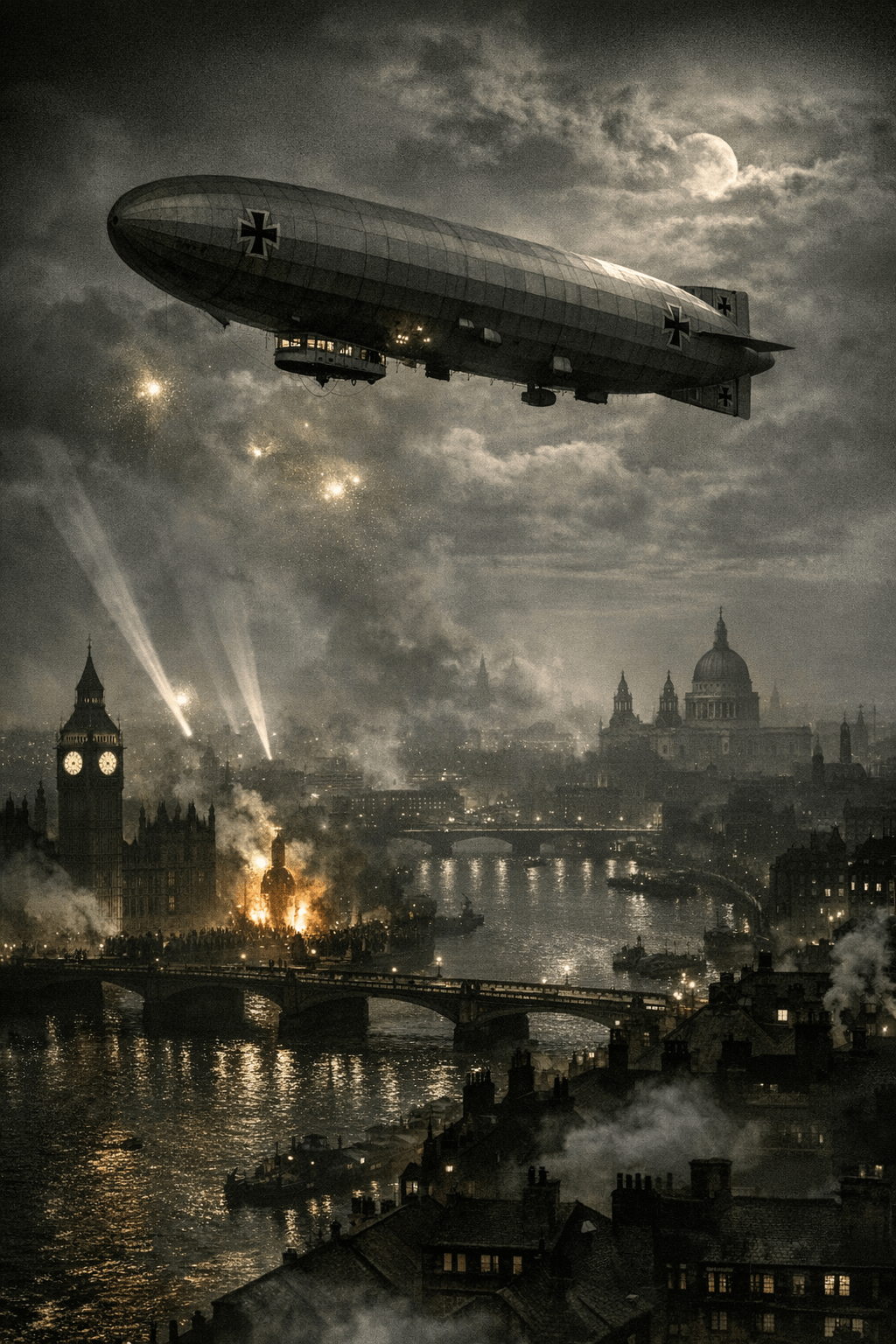
You may have read my post last Friday regarding the Elizabethan building that was discovered when a bomb exploded near to it during a First World War air raid.
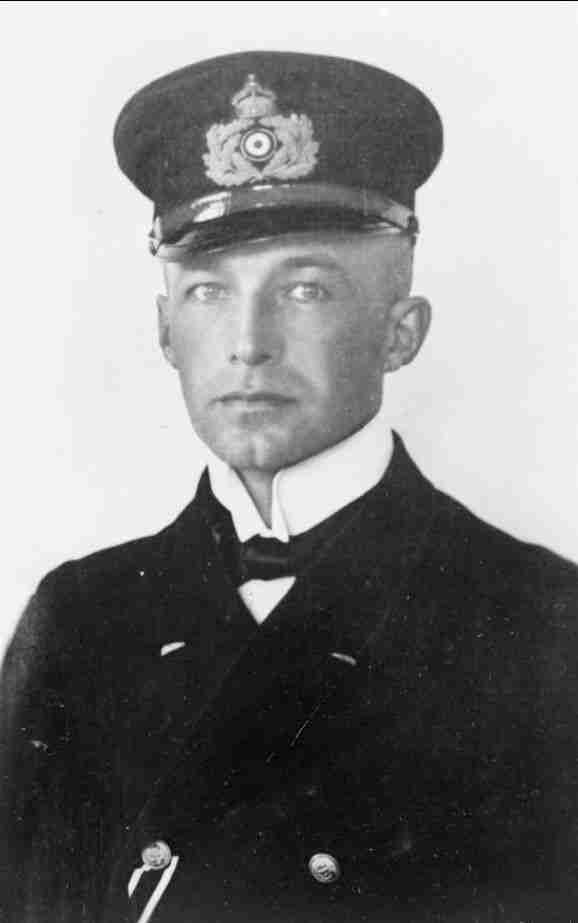
One of the participating Zeppelins on the raid was L13, a German naval Zeppelin under the command of Kapitänleutnant Heinrich Mathy. Apart from raining down terror and destruction on the populous below, Mathy had another task to perform on the night of September 8th 1915.
As his airship glided silently across the metropolis, Mathy readied an item that would strike fear into the hearts of the British people.
One of L13’s bombs dropped just outside the Dolphin Tavern in Red Lion Street, Holborn killing three people.Hanging on the wall inside by the bar, is the original pub clock which stopped when the bomb hit the building at 10:40pm that night.
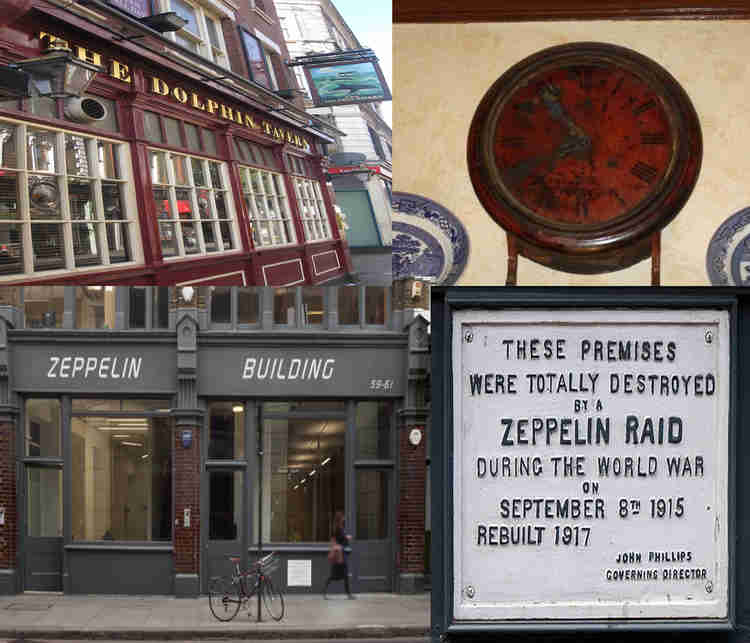
Another landed in Farringdon Road destroying the premises of John Phillips Brass foundry and lamp Co. Ltd, and the jewellers West and Price. Today, the building is known as the ‘Zeppelin Building’.
His work for the night almost done, Mathy then dropped through the Zeppelins hatch the object he had brought with him that was attached to a parachute. It was a ham bone.

However, no ordinary ham bone, this one was engraved and addressed to the then Foreign Secretary, Edward Grey. “Edwart” is pictured with tears running down his cheeks and the first line of an old German military song “was fang ich armer Teufel an?‘” (what’s a poor devil to do?). The reason for the tears is not that Edwart doesn’t like ham or even the sentiments in the song, but the inscription on the other side of the bone, “Zum Andenken an das ausgehungerte Deutschland” (A souvenir from starving Germany) The point that Mathy was making was that the naval blockade of Germany was not having the desired effect and that there was plenty of food, but perhaps also to justify Zeppelin raids as reprisals for the attempt to starve the German people.
On the night of October 1-2, 1916, Mathy again attacked London with L30, during which Mathy’s L31 was shot down and set on fire by 2nd Lt. W.J. Tempest, a British fighter pilot. The airship crashed to the ground just outside Potters Bar , north London; there were no survivors. Mathy’s body was found in a field away from the wreckage, half-buried in the ground. Apparently, he jumped from the burning airship. According to some accounts, he survived for a few minutes.

Originally buried with military honors at Potters Bar, the bodies of Mathy and his crew were transferred in the 1960s to Cannock Chase in Staffordshire, where a new cemetery had been established for the burial of all German soldiers who died on British soil in both World Wars. He and his crew are buried near the entrance, along with the commanders and crews of other airships shot down over England.

 A LONDON MISCELLANY
I never knew about this German cemetry. I hope it’s as respectfully managed as all those war cemetries in northern France which continue to make such an impression on any visitor.
LikeLiked by 1 person
Yes it is. Very different from those in France and Belgium, more austere, but not as much as the German WW1 maintained cemeteries. However very respectful tranquil and in a lovely setting.
LikeLiked by 1 person
Well, never knew about that German cemetery, but it sounds like it’s in very nice surrounding
LikeLiked by 1 person