
Because in London, being “off course” is often the point.
There’s a particular pleasure in walking through London without a plan. Not aimlessly, that’s different, but with a kind of gentle, deliberate looseness. A willingness to drift. A readiness to be surprised. It’s a skill, really, and one the city rewards more generously than most.
I’ve spent years exploring London this way, and it’s taught me something important: you don’t truly understand the city until you’ve let it confuse you a little.
And London will confuse you. It’s built on centuries of improvisation, medieval tracks, lost rivers, vanished parishes, streets that once mattered and now don’t exist at all. I wrote recently about those disappearing streets, the ones that survive only in old maps and the memories of people who once lived there. Walk around long enough and you start to feel those absences under your feet. The city is full of ghosts, and they tug at your sense of direction in the best possible way.
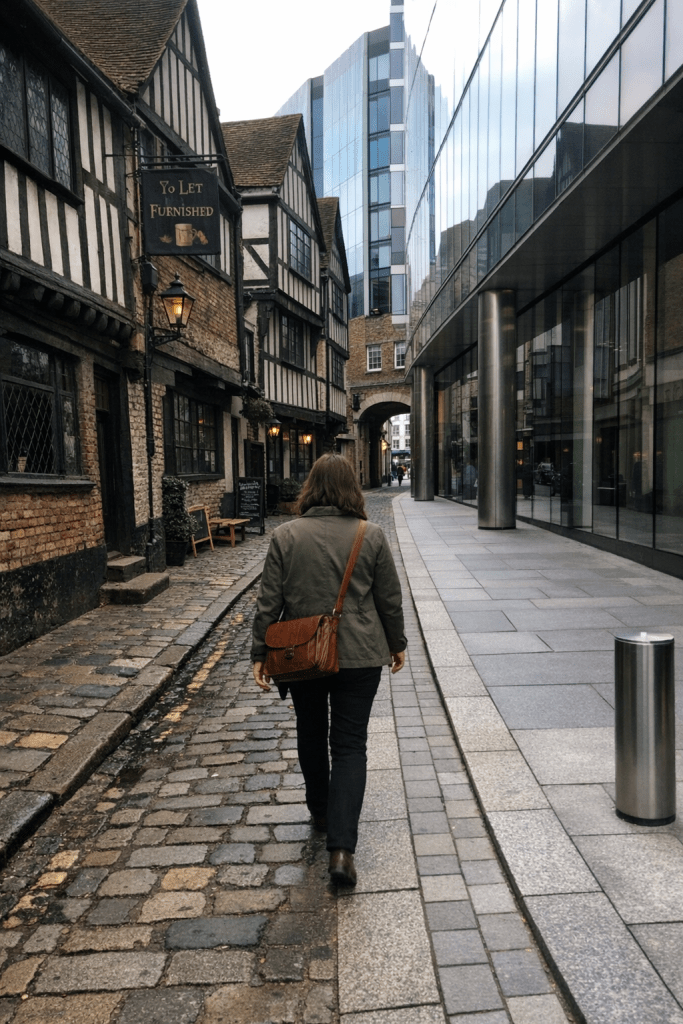
Which brings me to a phrase I love: blind chivvy.
It’s an old London expression for heading off without knowing exactly where you’re going, a sort of cheerful, semi-confident wander. Not lost, not found, just… chivvying along. It’s the kind of movement that says, “I’ll know it when I see it,” or “Let’s see where this comes out.” It’s how Londoners have navigated for generations, especially before phones started barking instructions at us.
A blind chivvy isn’t reckless. It’s curious. It’s the opposite of marching from A to B with your head down. It’s trusting your feet to take you somewhere interesting, even if they don’t take you somewhere efficient.
And in London, that’s often where the magic is.
Take a wrong turn in a modern city like Milton Keynes and you’ll end up in the same place you started, just having see more roundabouts. Take a wrong turn in London and you might find a Tudor alley, a forgotten churchyard, a Victorian shopfront that somehow dodged redevelopment, or a street name that hints at a long-buried story.
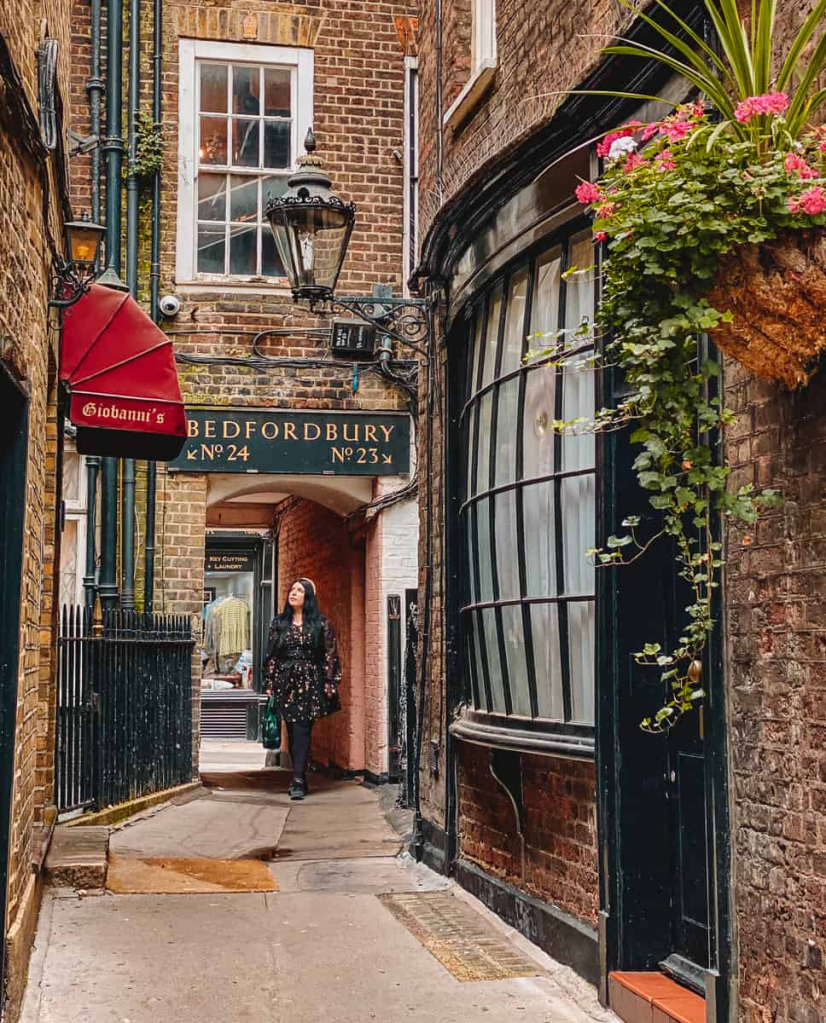
You can’t plan for that. You have to wander into it.
The trick is to let yourself drift just enough. Follow the street that looks slightly too narrow. Turn toward the sound of a busker. Let a market smell pull you sideways. If you loop back to the same pub twice, don’t worry, that’s not failure, that’s a classic London figure‑of‑eight. You’re in good company.
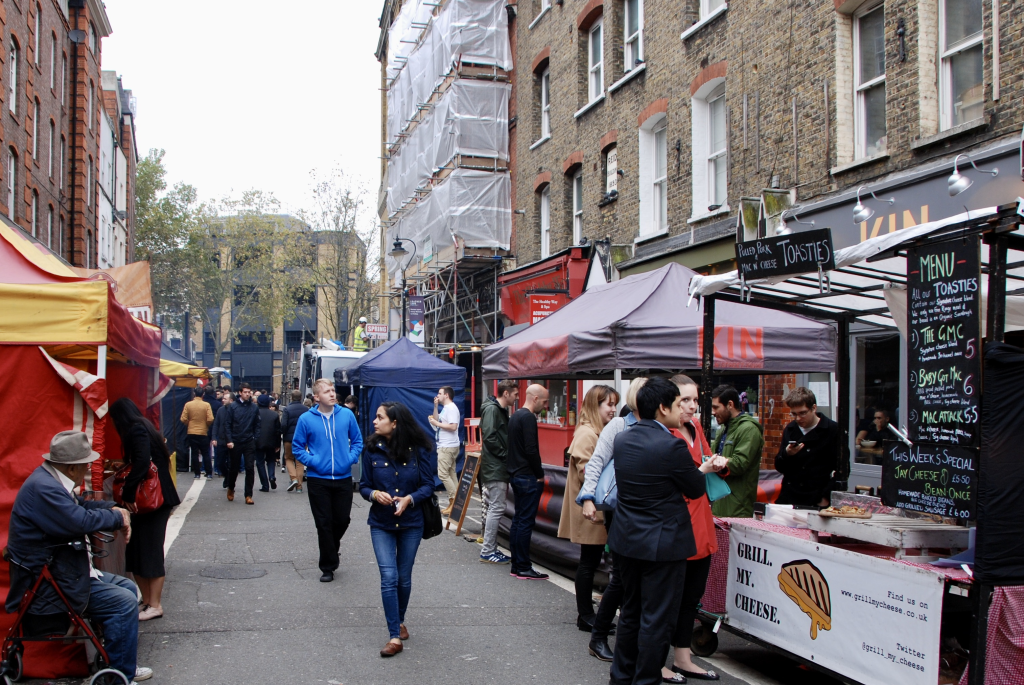
And here’s the thing: when you eventually reorient yourself, you realise you weren’t really lost at all. You were just paying attention differently. You were letting the city speak first for a change.
London is too old, too layered, too gloriously inconsistent to be understood through straight lines and efficient routes. Sometimes the only way to meet it properly is to let it lead you, through a blind chivvy, a happy detour, or a street you didn’t know you needed until you found it.
So next time you’re out walking, try it. Put the map away. Ignore the blue dot. Let the city take the lead. You might not know exactly where you are, but you’ll know London a little better; and that’s the whole point.

 A LONDON MISCELLANY
I love to do this in an old city. You’re right. A modern town centre is no use at all. But letting your feet go where they will, tugged along by the city itself is the best kind of exploring.
LikeLiked by 1 person
‘getting lost’ in an old town or city – getting off the beaten ttrack is usually very rewarding
LikeLike