I’ve been lucky enough in the last week to have been chasing a bit of winter sunshine. Before departing I was reviewing my notes for a project I have to create a number of tours which take in all the churches within the City of London.
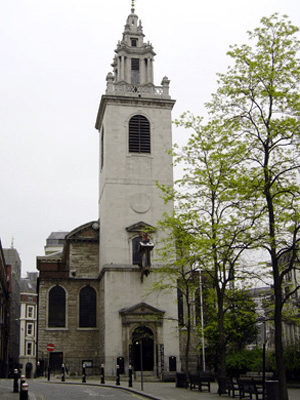
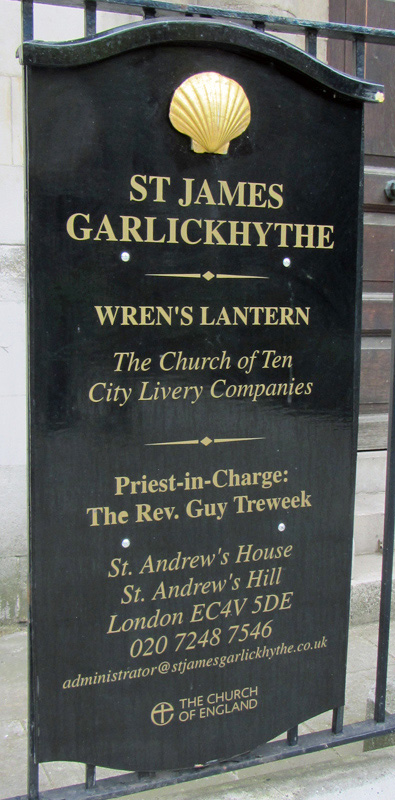
Amongst them is one of my favourites, St James Garlickhythe, as much for the name as for it’s architecture. Standing alongside the busy Upper Thames Street it has long connections with the Worshipful Company of Vintners, in fact the Vinters Hall is located on the other side of the street. At one time the church was much nearer the Thames and it gets it’s name from the nearest landing stage which was predominantly used by importers of Garlic.
There’s another thing about St James, it’s the starting point for pilgrims wanting to make the journey along the the Camino de Santiago.
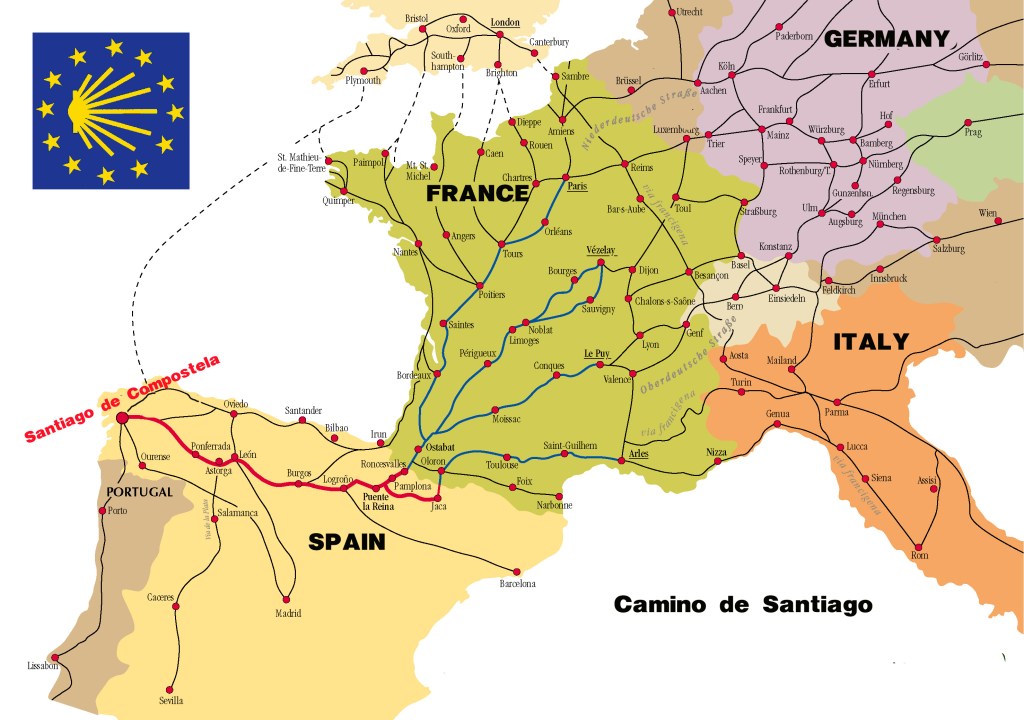
The Camino de Santiago has a way of getting under your skin long before you ever set foot on the trail. It’s not just a walk across Spain; it’s a thread that’s been woven through European history for more than a thousand years. The Camino, literally “the Way of St James”, is actually a whole network of routes, all converging on the shrine of St James in the cathedral at Santiago de Compostela in Galicia. Pilgrims have been making their way there since the early 9th century, and by 1492 it had become one of the three great pilgrimages of Christendom. Today, more than 200,000 people a year still shoulder a pack, lace their boots, and follow those ancient paths.
What I love is how this huge, continental journey begins in the most ordinary, local places. For pilgrims from the City of London, the first step wasn’t in Spain at all, it was at St James Garlickhythe. Since medieval times, this little riverside church was the starting point for Londoners heading out on their great adventure. Many would have boarded a ship right there at Garlickhythe, travelling with merchants across to Europe before joining the land routes south.
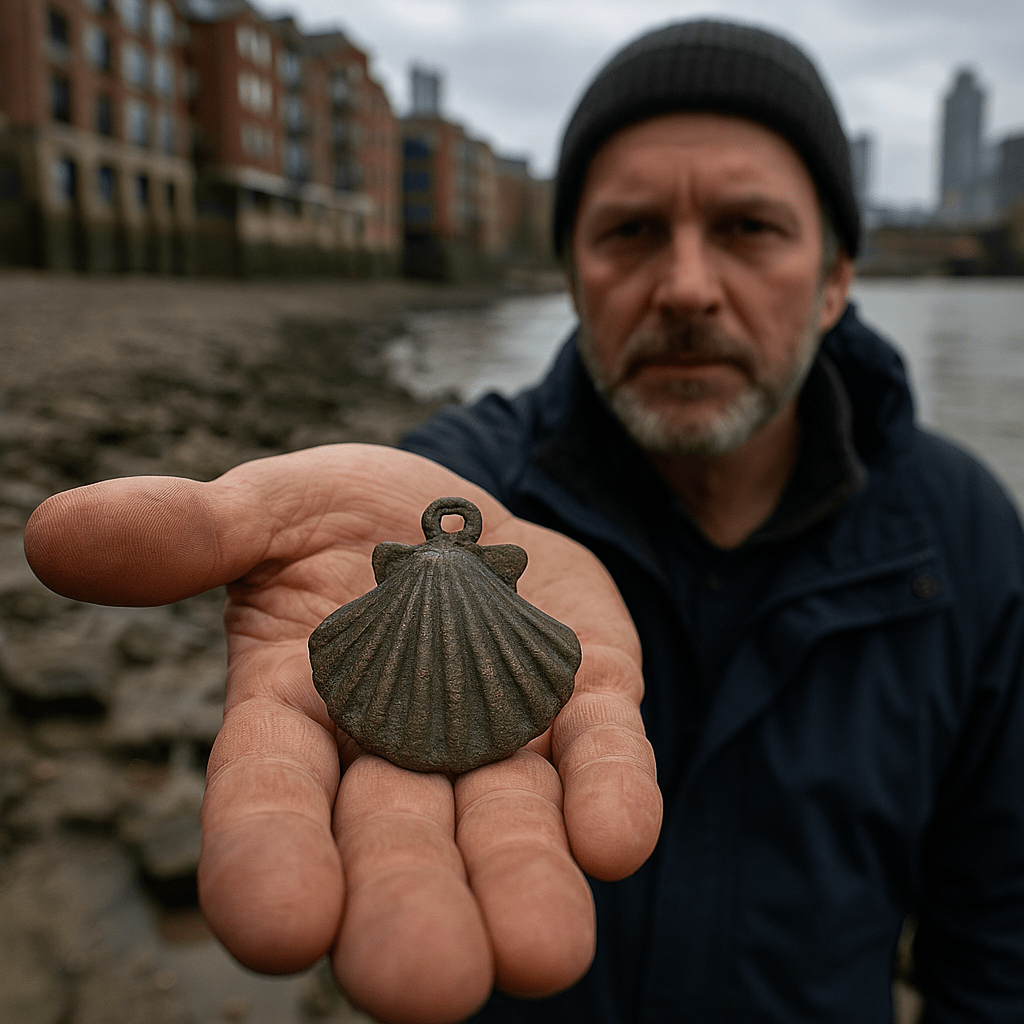
And every now and then, London reminds us that these weren’t just stories. In 2024, a mudlarker at Queenhithe, just a short stroll from St James found a bronze pilgrim badge shaped like a scallop shell, the classic emblem of St James. You can almost picture the original owner, centuries ago, clutching that badge as proof of their devotion and their journey. And it’s because of this shell motif that I encountered a bit of an issue.
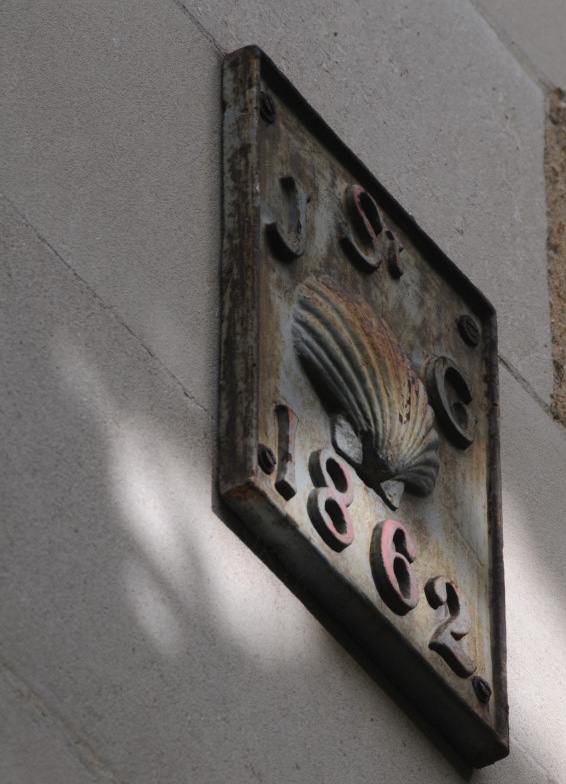
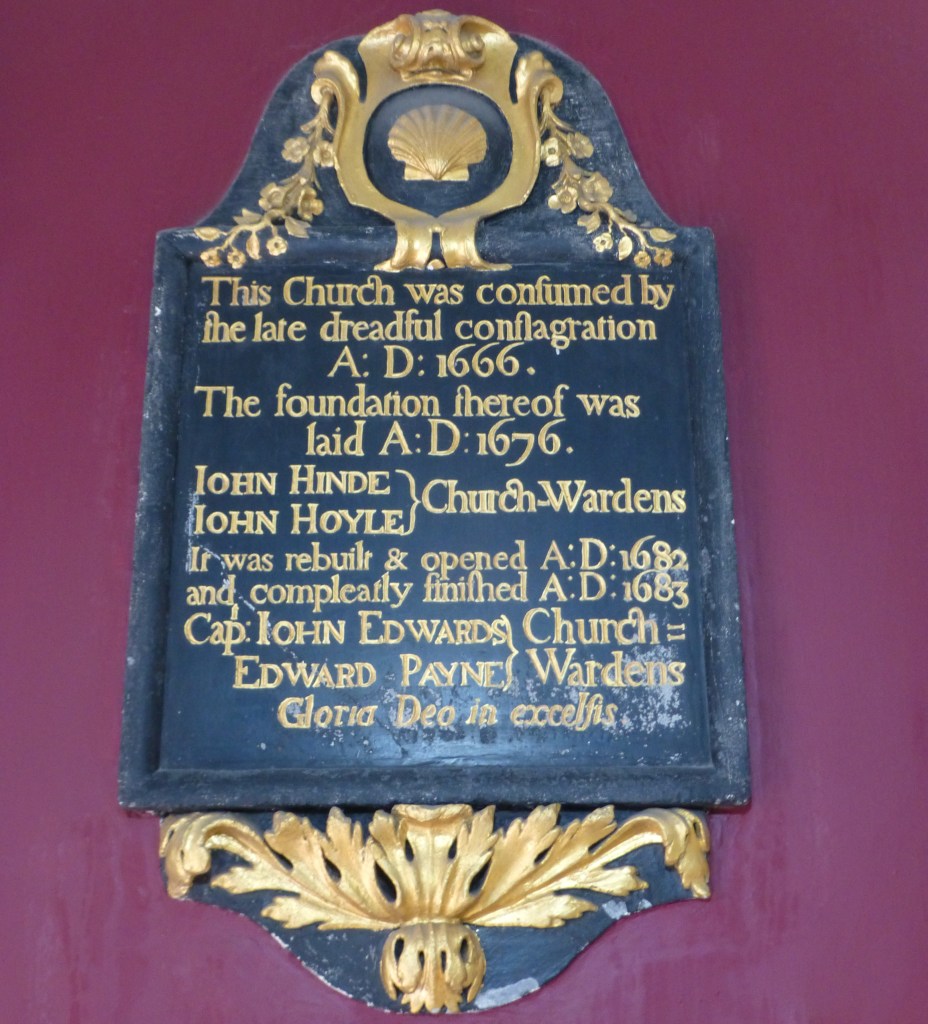
When I first started researching the church for a tour I was writing at the time I came across all the information regarding the Camino. The shell motif crops up within the church itself and also in the nearby parish boundary markers. And this is where I hold my hands up and confess to my lack of rigor in the old historical research department. Had I even the slightest pretention to being a proper historian, rather than a bloke who just relays stories, I would, I think, probably have made a list of citations backing up the information that I was collating for the tour. Needless to say i didn’t, and one fact I included was possibly not one hundred percent accurate, but on looking I can’t find where it came from.
Let’s pause here for a minute and let me remove my hair shirt (apt in the context of some pilgrims) while I recount my foray into foreign climes. Deciding to escape the noise, dust and upheaval of having a new kitchen fitted we decided to book ourselves on a short cruise down to Spain. While looking at the itinerary I noticed that during a stay in the port of Vigo there was an excursion to the shrine of St James in the cathedral at Santiago de Compostela. Having spent years talking to people on my tours about it, I thought it high time to actually visit it for myself.
Fast forward to us sitting on the coach en route to the town listening to a very informative commentary from our guide Eliana. There’s always a certain frizzante when you put two tour guides in the same place, there’s always an element of “I wonder if they know this fact?”, most meetings are polite, but I must admit that now and again I have descended into what one of my mates calls a Statoff! Anyway no such problems with Eliana who was charming and very knowledgeable, but just to show the Mrs that I was up to speed with the concept of the pilgrims I said, “I wonder if she’ll mention the scallop shells and their significance in the pilgrimage?” Obviously an open question eliciting the response, “Oh what’s that then?”. This was my moment, “They adopted the scallop shell as the pilgrimage logo because the pilgrims would carry one to collect drinking water from wells along the route“. Result, self satisfied face, and an air of “me, no I’m not your ordinary tourist I know about these things.” As they say pride comes before a fall.
Looking back I reconned later that I’d been imparting this fact to London tourists for about eleven years, rough estimate is that around two thousand people have heard it, a small percentage may have retained it, and even in some instances passed it on to others.
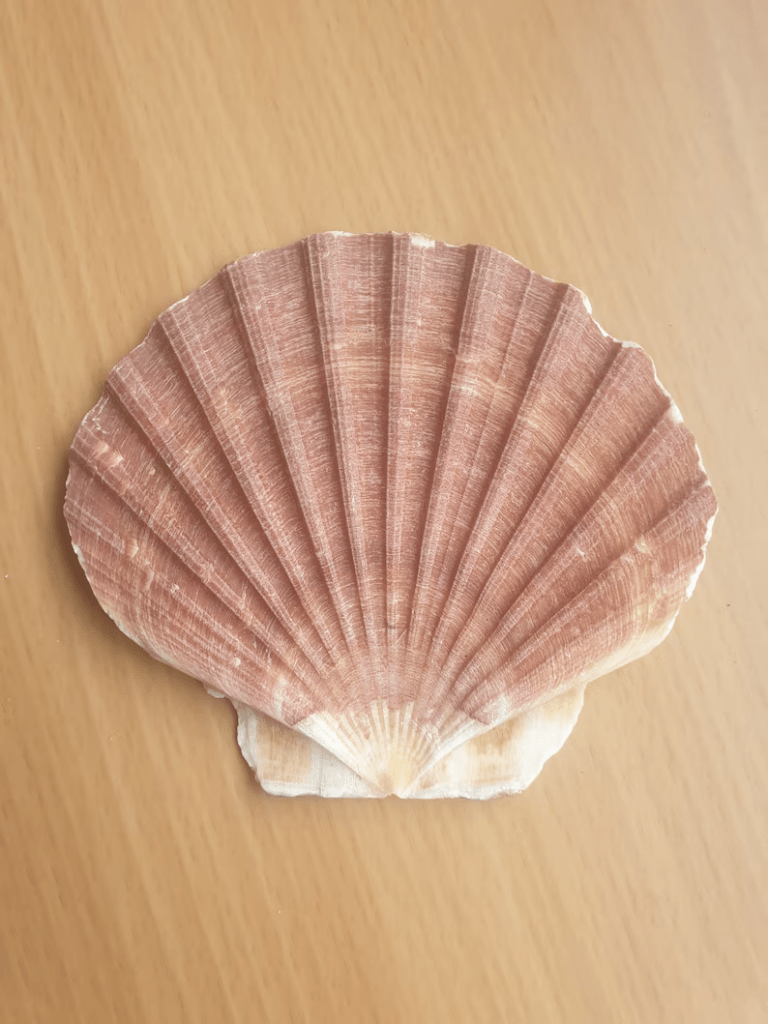
The tour around the town started and Eliana explained the various routes into the town and their significance. The first alarm bells started to ring when she began to elaborate on the scallop shell motif. I stood in our group sagely nodding as she explained that all the churches at the beginning of the Camino use the motif somewhere in the architecture. “Here we go I thought, used for water collecting along the route“. However what I heard was, “there are two reasons it was adopted, the first is that if you look at the shell, the lines on it all converge into one point, just like the various routes on the Camino. The second and most important fact I will tell you about later“
Slightly puzzled we moved on to tour the cathedral itself, which was pretty special inside. I was particularly pleased to find that around the alter they use a design resembling grapes, which is mirrored in the ironwork outside St James Garlickhythe.
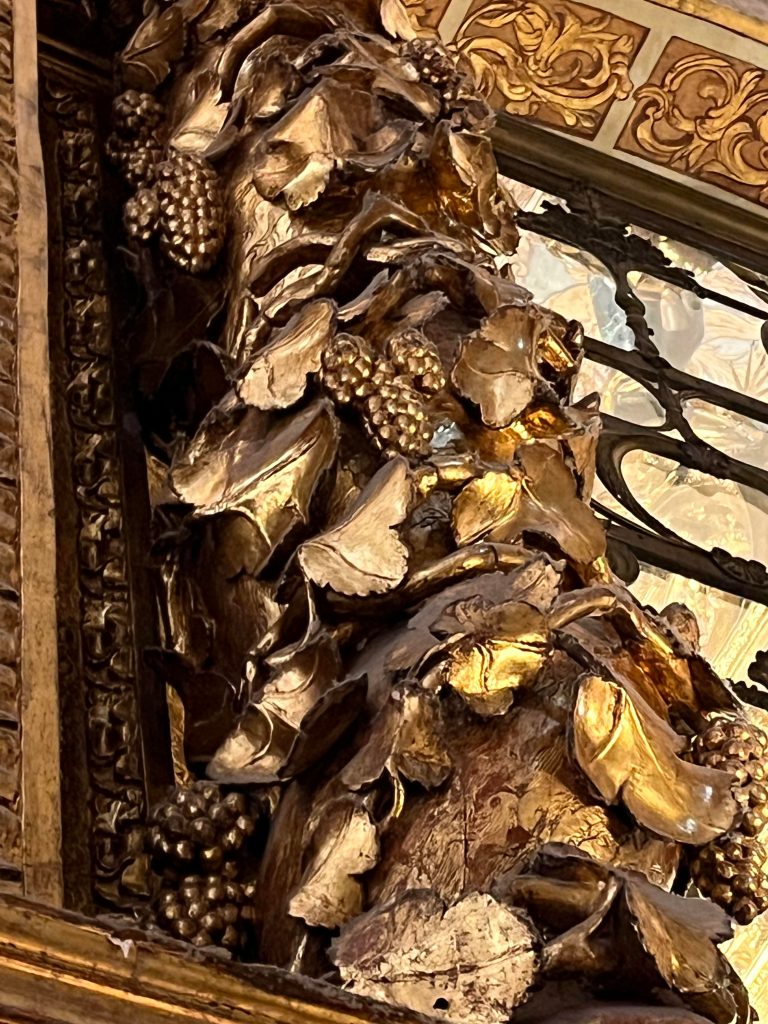
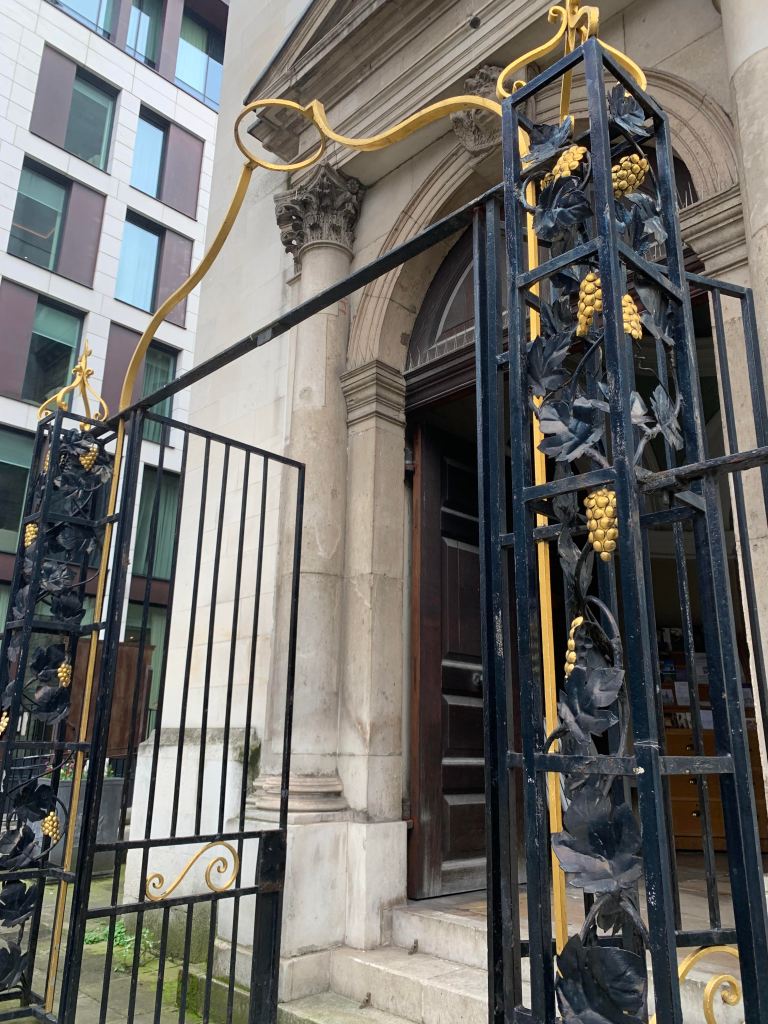
And then came the coup de grâce as Eliana said, “let me tell you about that important fact about the scallop shell“. I’d been mulling this over for a while and I had the feeling that things weren’t going to go in my favour.
To boil down what she said was that throughout human existence there probably has always been “Oneupmanship” One person does something, someone else wants to do it faster, longer, or make it more arduous. The same thing could be said of the pilgrims on the Camino. “So, you’ve walked the Camino and ended up at the tomb of St James, well done, God must be pleased” For many this was enough, but there would have been some that didn’t want to be lumped in with the rank and file, so they decided to go that extra mile, literarily, and in the case of walking the Camino an extra fifty miles.
Having made their devotions to St James at the Cathedral these uber pilgrims would then make the four day trek to Fisterra on the west cost of Galicia. (obviously without using an Uber)
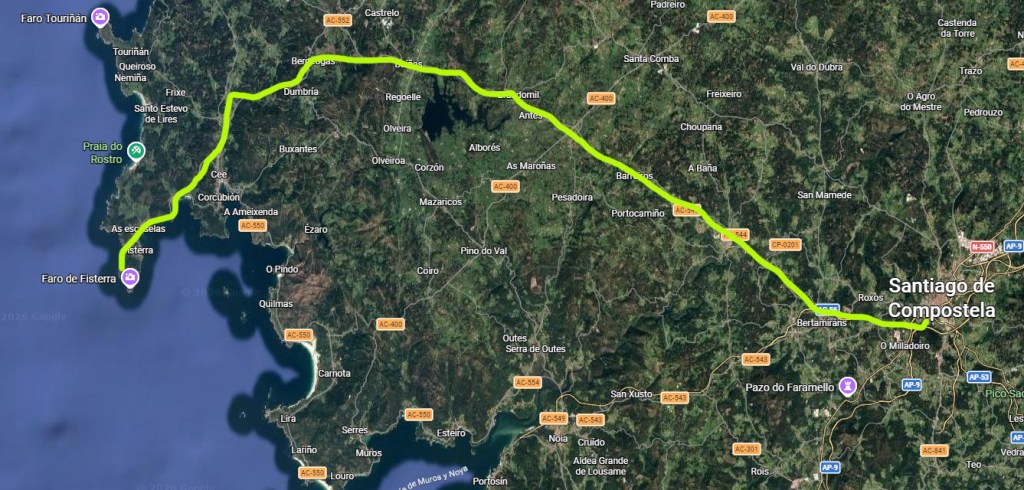
And to prove that they had shown that extra devotion, once at the finishing point on the Fisterra shoreline they would pick up a scallop shell as a memento and proof that they had gone further than the normal pilgrim. It speaks volumes that as soon as I heard that I thought that possibly someone should have opened a little roadside stall a mile or so outside Santiago De Compostela and knocked them out at a decent price, saving the pilgrims from making the trek, but that’s just me.
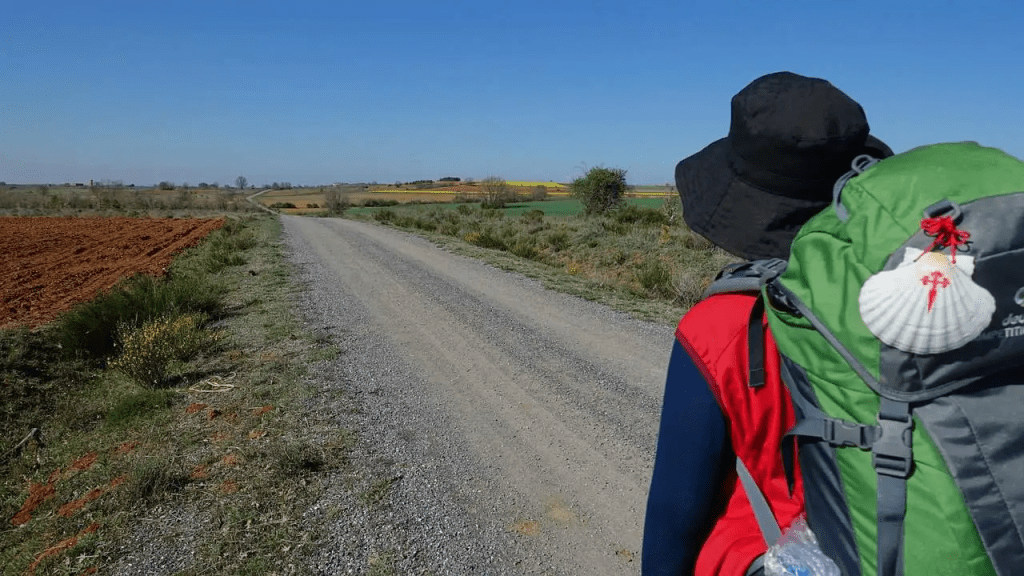
That tradition hasn’t faded. Pilgrims still come to St James Garlickhythe today for their very first Camino passport stamp and to pause for a blessing before they set off. First timers have a representation of the shell attached to their backpack, but those who have done it all before, and there are many, proudly display the real thing. There’s something grounding about that, this sense that even in a fast, modern city, the old rhythms are still there if you know where to look.
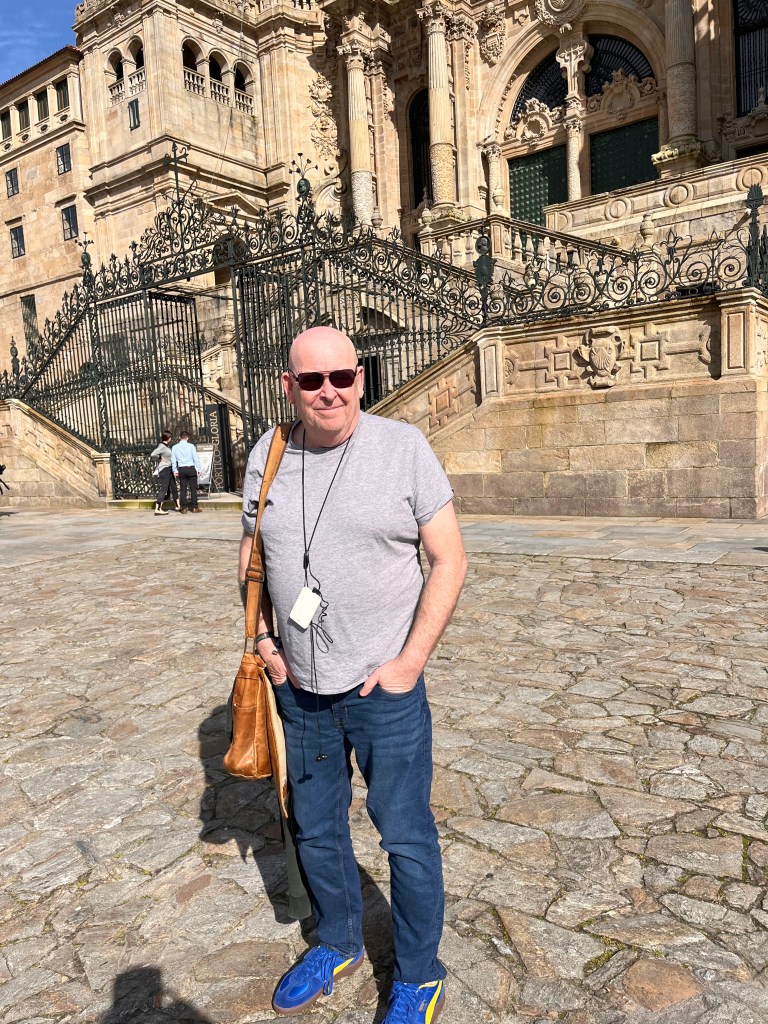
After the tour we sat down for a bit of Tapas and a glass of the local wine. Trying to cobble something together from my stat deficiency I plucked up courage to broach the theory of the drinking receptacle with Eliana. Her reply was kind and sensitive in the extreme, “Oh what a lovely thought, I’d never heard that before, yes I suppose they could have” A few moments later she pulled the large flat scallop shell she had shown us from her bag and tipped a little of her wine into it. Giving me a knowing look she then proceeded to drink what must have been no more than a quarter of an espresso cup of wine.

 A LONDON MISCELLANY
Oh, pride cometh before a fall and all that! Yes, those shells are ubiqitous anywhere where there’s a pilgrimage route. We lived in France for a few years, and a fireplace in one room was decorated with a shell motif, because we lived on one of the French routes, which of course are far less well known. I never did the Spanish Camino but have done odds and ends in France, and I shall certainly make a pilgrimage to St James Garlickhythe. In other news, several public footpaths near where I live in Yorkshire have recently been adorned with That Shell Motif, because they are among the hundreds of routes towards – in the first instance I suppose – St James Garlickhythe.
LikeLiked by 1 person
When I researched this I found that today there a few rules to qualifying as an actual pilgrim. It appears that you have to walk at least 25km in your own country before heading to mainland Europe. lots of different routes here https://www.britishpilgrimage.org/ I might scope out the London ones, might make a good tour route 🙂
LikeLiked by 1 person
It would. I didn’t know the 25 km in your own country bit. Awkward if you live on the south coast!
LikeLiked by 1 person