
Do you ever get a feeling about a location? It doesn’t have to be something outwardly disturbing, just a nagging notion that something historic at some time in the past might have happened on a particular spot.
I know that sound a bit vague, but there is a certain piece of central London that has always struck me as being so dull and non-descript, that something more exciting must have happened here in the past.
The area in question is quite a busy place, with tourists and workers using it as a thoroughfare to access the Thames path. On the south side of Blackfriars bridge there is a continuation of the path beneath both the railway and road bridges. In between the two is a set of steps that will give you access to the A201 that runs across the Thames on Blackfriars Bridge.
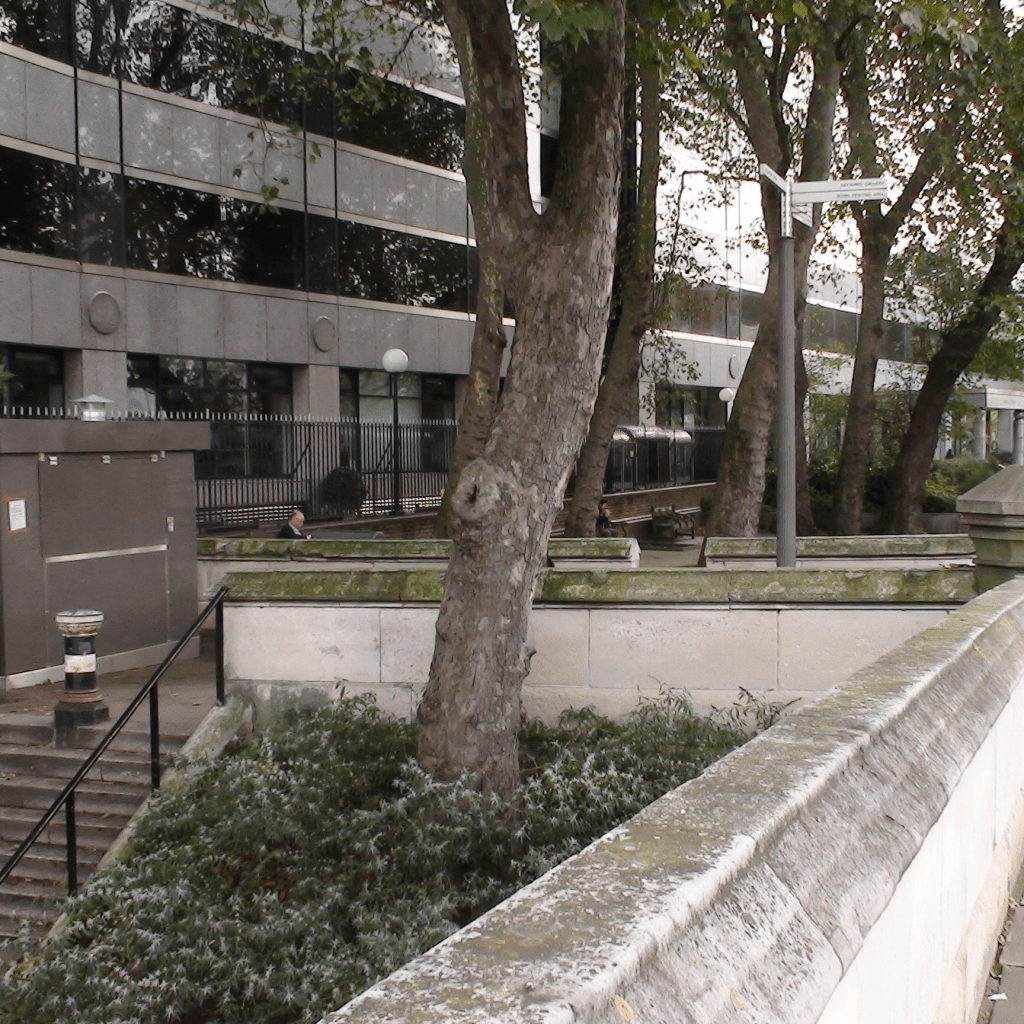

The gardens are named after engineer John Rennie (1761 – 1821), who built the original Waterloo Bridge and designed both the original Southwark Bridge and the former London Bridge, now in the USA
However, in addition to these achievements he, alongside James Watt and Matthew Boulton built on the site what is described a London’s first factory of the Industrial Revolution.
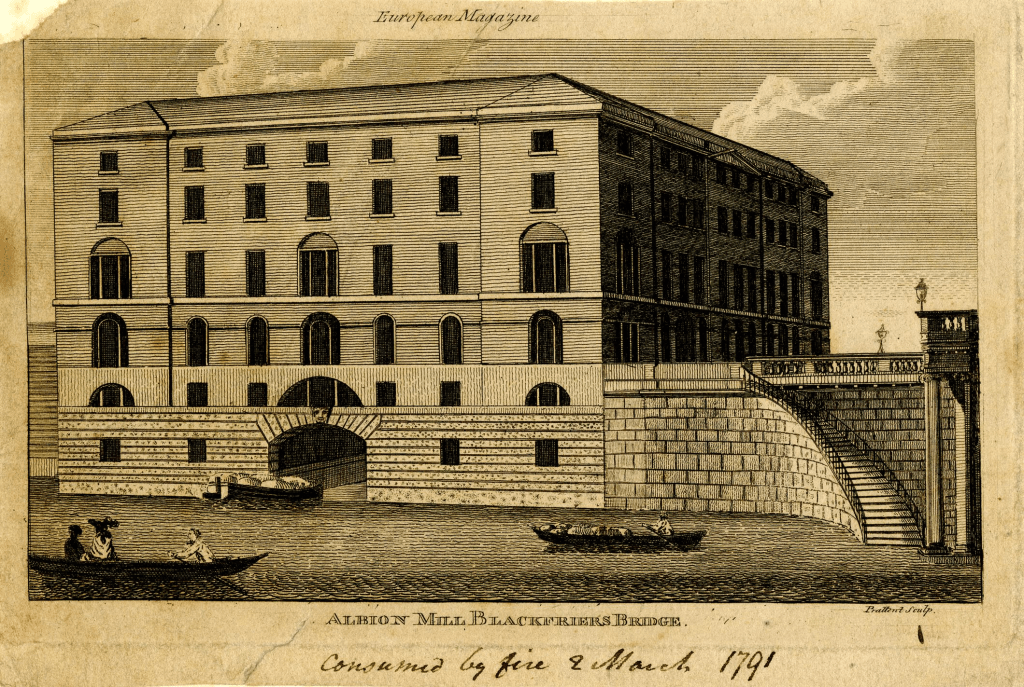
It was built between 1783 – 1786 and was known as Albion Mills. It was a five storey flour mill powered by steam engines and was the first of its kind in the world. The power that the engines produced was enough to turn twenty giant pairs of millstones, which would produce daily a staggering amount of flour. Such was its fame, that it became a fashionable meeting point for the upper classes to see and be seen, as they wondered at the miracle of modern engineering being built within the capital.
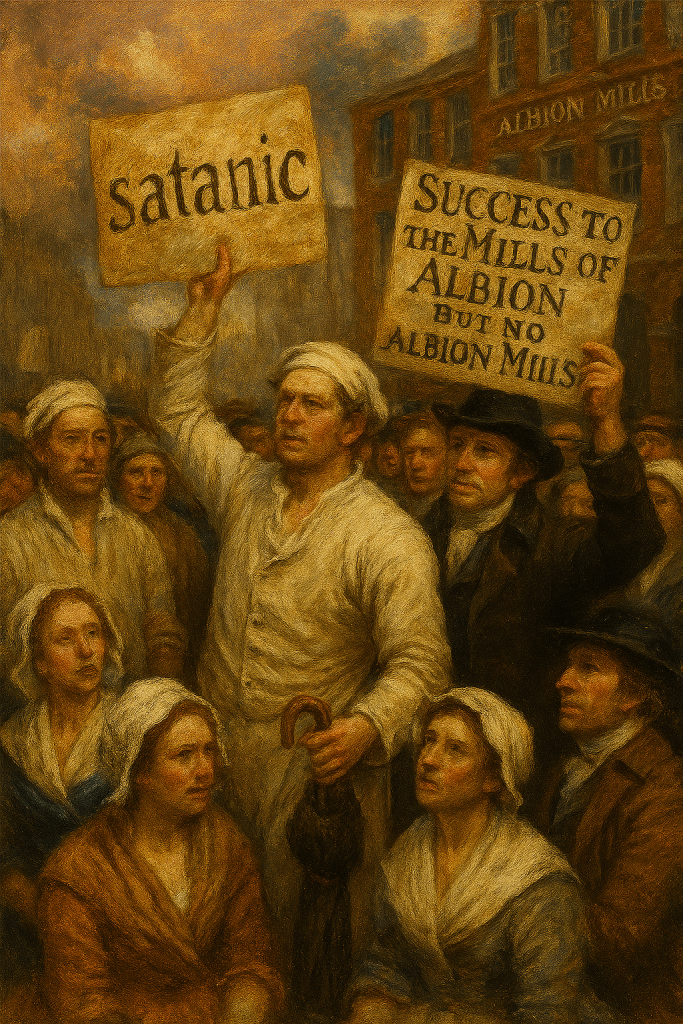
The mill wasn’t held in high regard by everyone, especially by local millers and millworkers, whose wind-powered mills were rendered obsolete by the new age of steam powered production. Opponents referred to the factory as “satanic“, and accused its owners of adulterating flour and using cheap imports at the expense of British producers.

So, when at 6.30 a.m. on the morning of March 2nd 1791 the mill caught fire and rapidly grew into a spectacular conflagration which the makeshift local fire service couldn’t adequately deal with, rumours circulated that it had been the work of revenging local Millers. London’s independent millers celebrated with placards reading, “Success to the mills of Albion but no Albion Mills.”
Rennie and architect Samuel Wyatt undertook a thorough investigation of the now ruined building and it was discovered that the source of the fire had been the combustion of grease on a milling machine, which had been situated too close to a kiln.
Even in its ruined state the mill continued to be a draw for tourists, as crowds flocked to see the ruined building. One such person was local resident, the poet William Blake. He would have been well aware of the antipathy between the mill owners and the independent millers, and it is thought that he used the situation in a line of his poem “Jerusalem”

And did the Countenance Divine, Shine forth upon our clouded hills? And was Jerusalem builded here, Among these dark Satanic Mills?
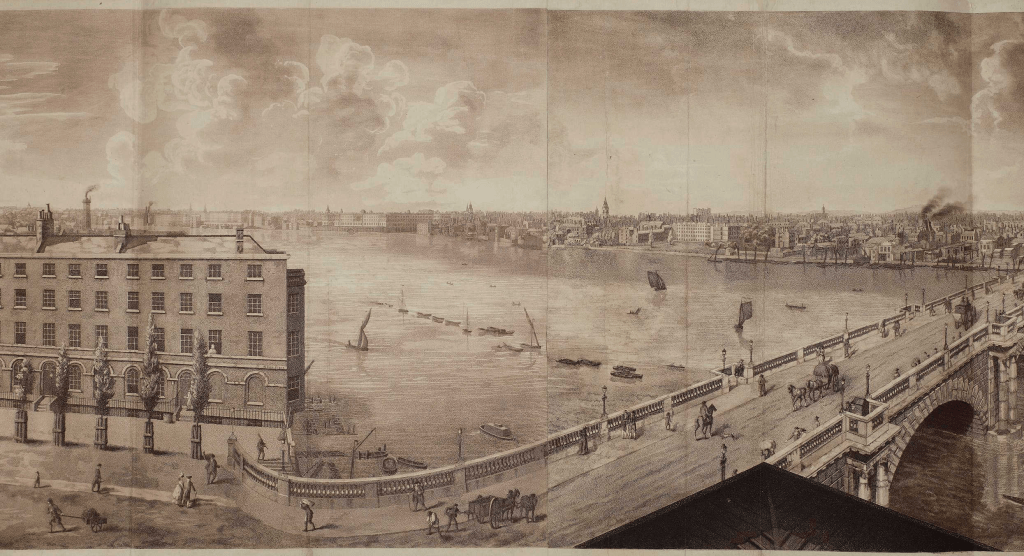
After the mills completion in 1786 its situation on the south bank of the Thames afforded great view of St Pauls Cathedral and the City. In the year running up to the fire, father and son artists Robert and Henry Aston Barker used the mills roof to make proprietary sketches of the panoramic view, spending the next two years on the painting, which was displayed alongside other views of London in a purpose built building situated in Covent Garden.
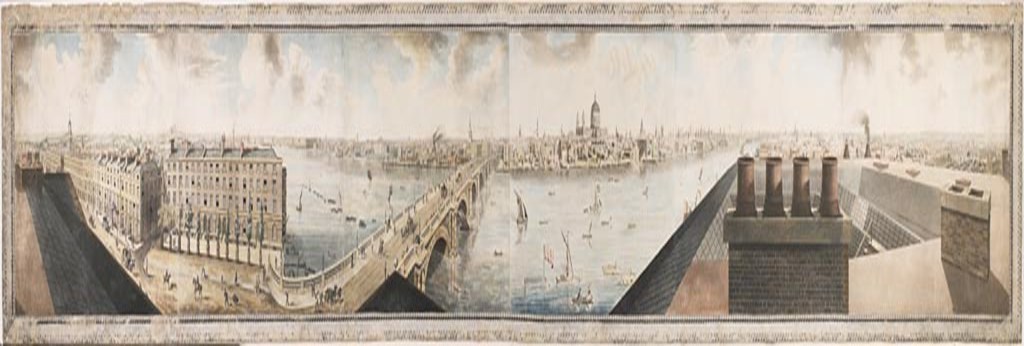
There has been building work this year at the edge of Rennie Gardens and structures only built in the 1990’s have been demolished to make way for flats. The Gardens are to be truncated somewhat and look to become even more insignificant that at present with more hard-standing and less space for plants. There does not seem to be any information regarding the significance of Albion Mills at the moment, but perhaps it will magically appear when all the building work is finished?


 A LONDON MISCELLANY
What a fascinating – and unsung – footnote to London’s history. I hope it qualifies for a plaque of some sort as the project completes.
LikeLiked by 1 person
As Margaret says, and hope you will keep us a breast with progress
LikeLiked by 1 person