
The Nation Lottery started in the UK on the 19th November 1994, however, this was not the first nationwide lottery to be run in Britain.

“The Lottery” by William Hogarth 1721 showing the two lottery wheels.

The first state lottery was the idea of Master of the Royal Mint, Thomas Neale in order to raise money for the Exchequer (after Neale had taken 10%). It was known as the Million Lottery or later the Million Adventure. A few years into the 18th century the Bank of England was awarded a Royal Charter to run the lottery. As well as generating money for ‘good causes’ it also funded the British Army to fight wars. It is documented that just over a quarter of the money raised between 1803 -1815 was used to finance the Napoleonic wars.
As shown in the picture above the lottery machines were two large wheels or drums that could be revolved and a hatch for the operator to take each winning ticket from within. These wheels were housed in their very own building just off Whitehall near what were the Privy Garden Steps, now under Victoria Embankment Gardens.


Prizes were pretty substantial, the £30,000 first prize shown below amounts to about £4.5 million today, however, so was the cost of a ticket. In 1790s a ticket would cost £14.00.
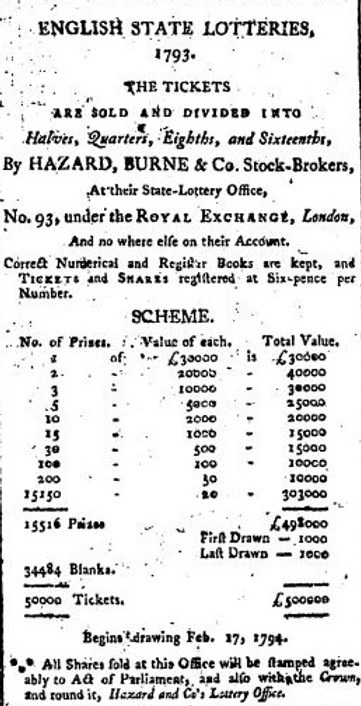
This would have been well out of the price the ordinary manual worker could afford, so a trade in selling shares in a ticket sprang up, with anything up to 30 shares per ticket being offered.

Lottery tickets were mainly purchased through Stockbrokers and in the case of the City of London, these were mostly based around Cornhill.
A look at directories of the time show many such Lottery Offices (Green dots), J Sivewright No. 35, Hornsby & Son No.26, Joseph Warner No.16, Carroll & Co No.7 and Nightingale & Co in Popes Head Alley.
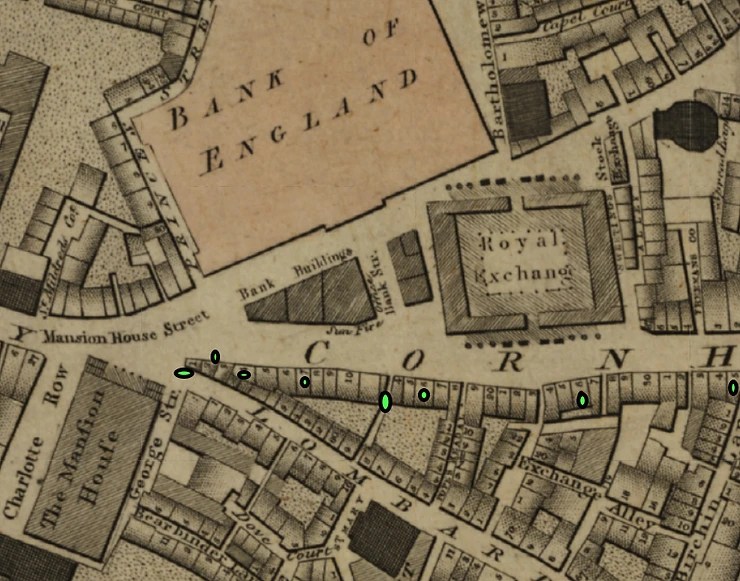
Like many of today’s lottery players superstition played a big part in the purchase of an 18th century lottery ticket. People had their own favourite office from where they would always purchase a ticket. However, the general consensus at the time was the closer the office to the end of Cornhill, the better your chances of purchasing a winning ticket.

This superstition was fueled by the three offices at that end of Cornhill, Thomas Bish at No.4, Hodges & Co at No.2, and probably the greatest exponent of them all in terms of playing to the public’s superstitions, J Pidding & Co at number 1 Cornhill. Pidding coined the phrase for the location of his office as “Lucky Corner“, which he used in advertisements proclaiming his office to be the biggest seller of winning tickets in the country.

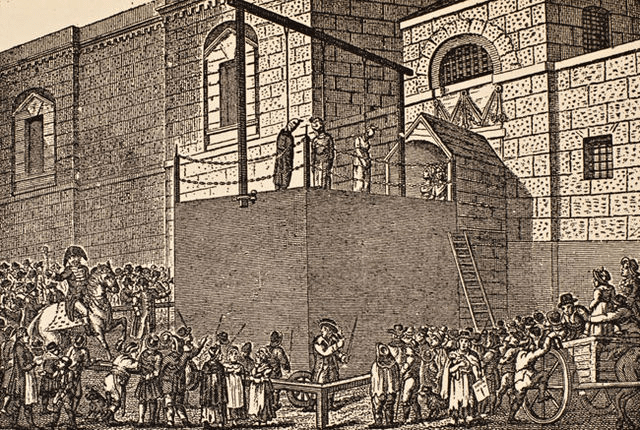
This Lottery fever was a Godsend to anyone looking to make a quick score. Even as early as 1720 there are tales of deceitful activities and possibly the first person to ever be charged in conjunction with fraudulent tickets is Abraham Deval who in 1724 started printing counterfeit tickets for smaller denomination wins. Abraham appears to be too clever to just present his forgery as a winning ticket at the Mint office, but with a stash of tickets bearing numbers that had recently been drawn he takes a trip into the country regions around London. In small towns and villages across Kent and Essex Deval obtains good and services and gives a hard luck story of losing his money, offering his winning ticket as payment for the much smaller debt. Anyone who was able to read would have been able to look up the recent winning numbers in the newspaper and human nature being what it is would have taken payment by the ticket. However, it appeared that Abraham got lazy and one day decided to forgo his road trip, instead plumping for Cheapside as a location to get rid of his fraudulent tickets. In a coffee shop in Exchange Alley he sold a ticket to a merchant, Solomon Grimstone and then went off looking for another mark. Unluckily for Abraham, Mr Grimstone has business next to the Mint office and quickly discovers the ticket to be counterfeit. Enraged, he high tails it back to Cheapside and begins with the help of several Constables to search for Deval, who rather stupidly has decided to stay in the area and have a bit of lunch. When arrested he is found to have twenty six fraudulent tickets and seven blank ones on his person. Deval’s number is well and truly up and he is sentenced to death at the Old Bailey and hung at Newgate prison on the 14th October 1724.
The lottery ran until 1826. By then it was no longer under the Bank of England’s control and the license to run it was auctioned off on an annual basis. Public confidence in the way it was run had been lessened by several badly handled draws which caused a public outrage. The Government at the time set up a commission to look at the way it was run and concluded the whole system had become too complicated to be run without fear of abuse or fraudulent activity and so revoked the licence.

 A LONDON MISCELLANY
Well, Deval got his deserts, but even I think that was quite some harsh punishment!
LikeLiked by 1 person
Did seem a bit harsh, but it was the Kings lottery so I suppose it was classed as treason.
LikeLiked by 1 person
🤣
LikeLike