
I’m a football fan of a vintage that can remember back to a very ill thought out concept that was run by British Rail, the Football Special. We’re going back to the mid to late 1970s when the scourge of football violence was reaching it’s peak. Whoever at BR thought it was a good idea to put several hundred, mostly drunk and rather lairy young men on a train for three to four hours may have reflected later that it possibly wasn’t their best decision!

I remember catching several of these trains, mostly made of old coaching stock, uncomfortable, dirty and destined for the salvage yard, most were hastened there after the occupants had thoroughly trashed the interior. It had the feel of cattle going to a slaughterhouse, as sometimes the carnage awaited you at your destination in the form of the opposition’s more vociferous fans.
I was reminded about these “Awaydays” of my youth by a story I found while researching a new tour. This one’s a bit of a departure from the norm as it takes place on a train journey. The incident shows that the mentality of the Football Special, which in essence was just a big pay day for BR without any thought or duty of care (I don’t think due diligence was a thing back then) wasn’t a mid twentieth century phenomenon.
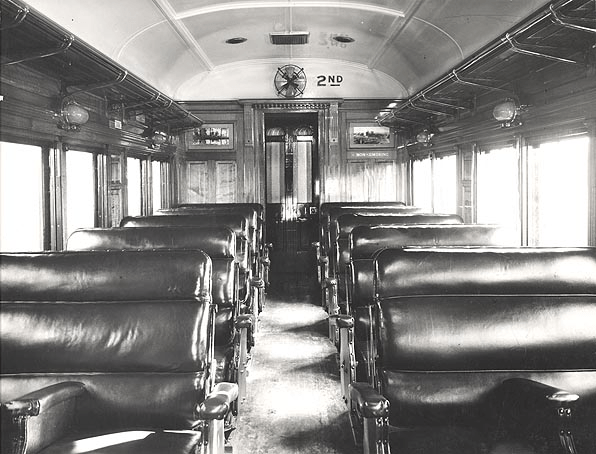
Around the late 1890s railway companies across the UK all had the same problem, falling revenues. They all adopted a rather clever ruse to help offset this in the form of the abolition of second class travel. At the time you could purchase a first class ticket and travel in relative comfort, the preserve of the upper classes, while a third class ticket would be basic, no more than glorified covered cattle wagons with hard wooden bench seating, designed for the lower orders. Well they wouldn’t want anything better would they? The second class was aimed at the white collar middle class, Bank Clerks, Solicitors, Doctors etc.

The abolition of second class travel meant that these people of the middling sort were faced with a stark choice. Either travel third class with the great unwashed or pay a premium to travel in the comfort of first class. A lot of the “professional” people opted for the upgrade, but many in junior roles decided that the perceived saving in ticket prices was well worth the discomfort and in some cases the discomfiture. Many were rather shocked when the reality of cheaper travel came home to them.

The railway companies had not foreseen a groundswell of discontent from these downgraded commuters, probably thinking that all second class travellers would meekly opt for the upgrade. It’s around this time that the first lobby groups were formed similar to today’s Rail Users Association, which united the majority of disgruntled passengers. So now the railway companies had another problem to deal with, that of a massive PR blunder and a discontented traveling public.
After several years they reached a compromise. They didn’t reinstate second class, but upgraded third class to make it slightly more comfortable and in the most part increased the ticket price for both first and third. This seemed to take the pressure off and in most cases the companies found that the better conditions actually lead to an increase in third class passenger numbers, However, they still remained under the watchful eye of the lobby groups and paid a lot more attention to customer satisfaction for both travelling classes.

During this period there was a lot going on with the military. Britain had it’s Empire to rule and servicemen were constantly crisscrossing the globe to remind the natives who was in charge of their country. There was also a huge merchant fleet that shipped the spoils of Empire back to the mother country. With large military movements special trains were requisitioned to move servicemen around and this was rather lucrative business for the rail companies, however when the numbers of men were not viable to put on a special train, the railway companies were faced with yet another problem. Having just emerge from the issue of customer satisfaction and seeing 3rd class passenger numbers on the rise, they were not inclined to do anything to upset this. Therefore it was decided that servicemen travelling in larger numbers would be furnished with a carriages of their own to keep them away from the fare paying public.
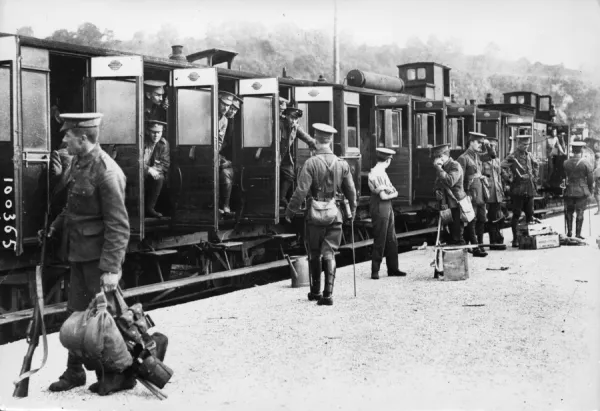
In March 1887 a Royal Navy supply ship, the Govern, slipped into the East India dock in the Pool of London to await a refit. The crew, totaling around one hundred and twenty men were billeted in the dock area awaiting travel the following day. Half the crew were to travel to Chatham in Kent, while the other half were bound for Liverpool. Overnight they were kept in relative confinement and were not allowed to leave the billet, however, the following morning around 7.00am they were turned out and ordered to make their own way to their respective points of departure. The Liverpool contingent had to board their train at Paddington for departure at midday. As you can imagine having been at sea for a period of time and having been denied the chance to let off steam after docking most of the fifty or so Liverpool contingent went on a four hour binge in the pubs in and around Paddington station. Come the hour of departure most if not all who boarded the dedicated carriage were rather worse for drink.
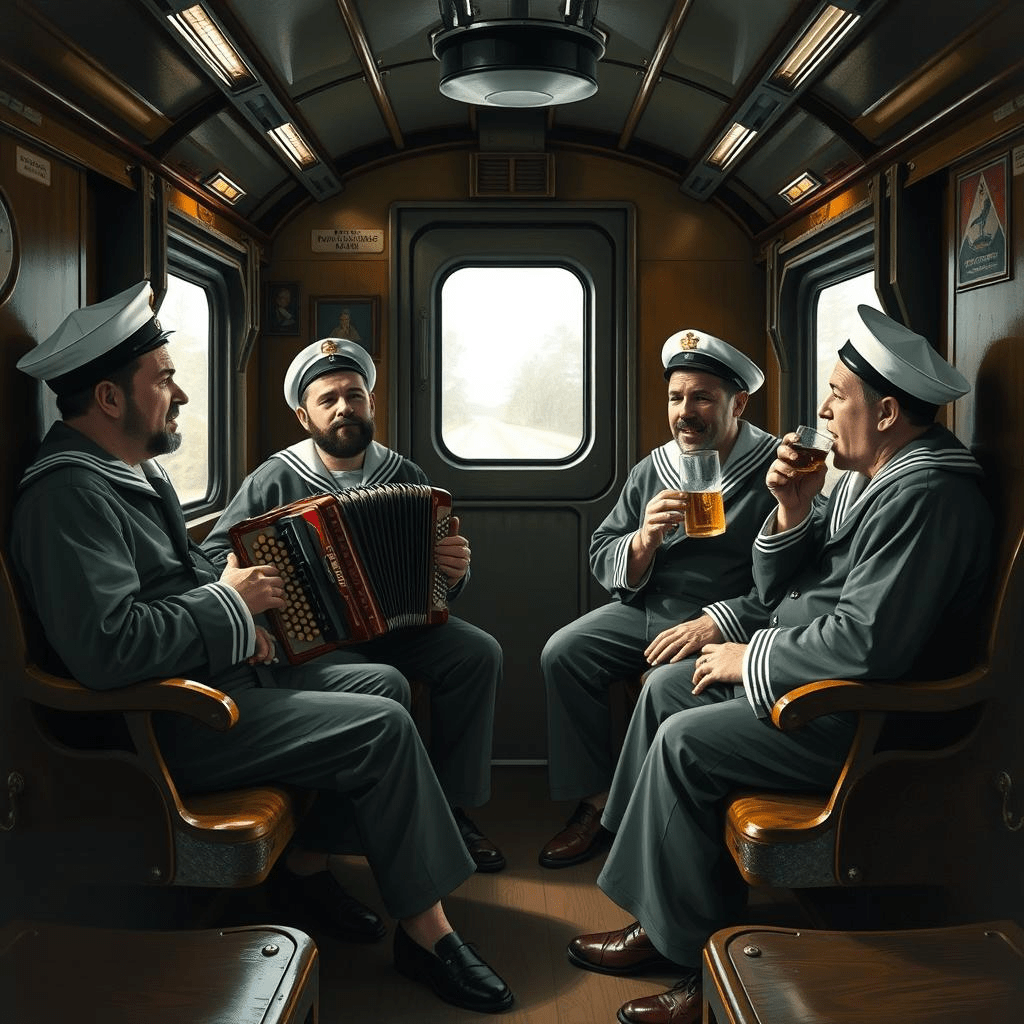
Apparently the journey started amicably enough, an accordion was produced and a sing song ensued, however not everyone was filled with bonhomie. As the train slowly exited the environs of Paddington and gradually picked up speed as it headed towards Ealing, several of the men on board decided it would be an opportune time to settle a few grievances that had been felt during the voyage. A scuffle broke out between two men at the rear of the train regarding a debt, several men went to break it up but got drawn into the ensuing fisticuffs and the squabble turned into a full on brawl. This seemed to act as a signal to others to either involve themselves in the melee or pick fights of their own and within minutes the carriage resembled a battlefield.
A stoker, Albert Reardon was sitting at the furthest end away from the fighting and was apparently trying to get some sleep. Dependent on who’s testimony you believe two other sailors Marsden and Jones entered the compartment and Marsden picks a fight with Reardon which quickly spills out into the corridor. Reardon angry at being disturbed proves the better fighter. Seeing his friend bested by Reardon, Jones pulls out a knife and launches at Rearden stabbing him in the head before several other passengers try to restrain him. By this time the train is just pulling into Acton station.

The stop at Acton signals to those not involved in the skirmishes an exit from the mayhem. The doors burst open and combatants and non combatants alike spill out onto the platform, some fleeing the other continuing their brawl, all in front of the startled passengers waiting to board the train.

Newspaper reports say that some stout men join in, while several ladies were seen to swoon and collapse from the terrible sight before them. Station officials are quickly on the scene but fearing for their safety retreat to watch from a safe distance, as thirty of so men do battle on the station platform. It is only when someone inside the carriage decides to remove the seating and hurl it through a window that a call goes out to the police and station staff try to regain control.
Gradually the melee subsides until only two men are left grappling with each other, by then Jones has manages to stab Reardon in the arm. Station staff restrain the combatants until the law arrives in the form of Police constable Henry Longden who takes Jones into custody. In his report he mentions that several of the carriage windows were smashed, but fails to find a knife on Jones or subsequently in the carriage or platform.
During the trial the judge seems more contemptuous in his critisism towards the railway company’s representative Mr Kent for putting so many potential miscreants in the same carriage as he does towards the perpetrator saying, “If six drunken men were put into a carriage alone would be an awkward business. It looks rather strange if they were in this state of intoxication that they should have got on to the train. The company might have refused to allow them there at all.“.
Mr. Kent replies, somewhat incorrectly, that the precaution had been taken of putting these men into a separate corridor carriage, and none of the other passengers were inconvenienced by or knew anything of what was going on at the time.
Jones was convicted of malicious wounding and served three months hard labour.

 A LONDON MISCELLANY
What a tale. I was once travelling with my grandson on a train that had a group of young men who’d been to a match. It wasn’t a great experience (singing, swearing, shouting), but we couldn’t go to another carriage as the train was crowded. Six young men was too much for me. A carriage full? A train full? Aaaaagh!
LikeLiked by 1 person
I know what you mean. I find it annoying whenever I travel up to London regardless of who’s in the carriage 🙂 Other people’s noise, Aarrrgh! Headphones on volume at maximum.
LikeLiked by 1 person