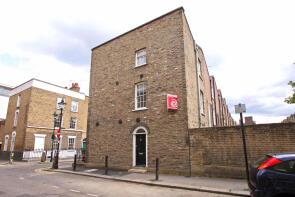
Friend Street in Islington is a very unassuming thoroughfare which allows you to cut through from St John’s Street to Goswell Road. Recently while writing a new audio tour I used it as just that, a cut through and didn’t pay it much attention.
Over the Christmas period at a bit of a loose end, I started to read a rather good website that lists the history of most of Islington’s Streets and that is where I came across the entry for Friend Street, which showed I had fallen down on the job.

Friend Street was once known as Brewer Street North and was back in the 1800s a rather curious mixture of housing. Charles Boothe’s poverty map of 1863 shows some streets were classed as poor, some mixed and other inhabited by people earning a good steady wage. The street was home to the Finsbury Dispensary established in 1780 for supplying the, “labouring and necessitous poor with medical advice and medicines“. In the 1750s the street housed the Great Room, a sort of early arts center, which was used to perform plays, recitals and exhibitions.
It was most famous for Russell’s Puppet Theatre. Puppet theatre became fashionable adult entertainment in 18th-century London and several marionette theatres were established, including Martin Powell’s puppets, which opened in St Martin’s Lane in 1710, Punch’s Theatre in James Street and the Patagonian Theatre in Exeter Change. Russell’s theatre, which began above a tavern in Brewer Street, Soho, used marionettes to lampoon famous people and satirise current theatrical fashions, such as Italian opera.
Why Mr Russell should relocate his theatre out to the wilds of Islington will become clear later, but records show that while it was in situ there it was under the management of a well known and very contentious figure, that of the Actress Charlotte Charke.
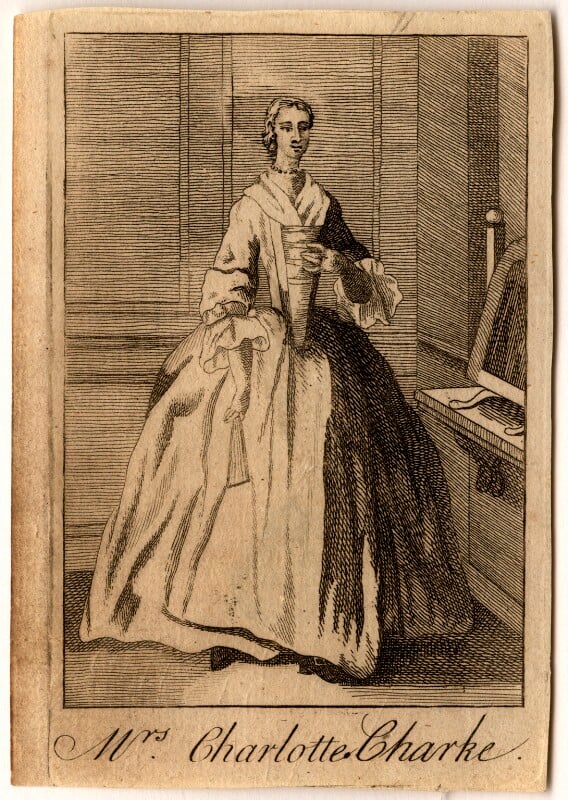
Charlotte was born, one of twelve children in 1713. Her father was actor, playwright, and poet laureate Colley Cibber, and her mother was musician and actress Katherine Shore.


Just to prove that everyday is a school day, I’d only heard of Colley Cibber as a pseudonym for the murdered newspaper reporter Fred Hale in Graham Greene’s Brighton Rock, so I got a little sidetracked.
Out of the twelve Cibber children only Charlotte and three of her siblings made it past the age of one. Charlotte as the youngest and probably not planned was shunned by her brothers and sisters and even her mother described her as “an unwelcome guest to the family.”

From an early age she took an interest in the theatre, and often spent time at the Theatre Royal of Drury Lane, which her father managed and took a keen interest in the male actors, watching their movements, posture and diction, which she would later practice on her own.
With her father absent for long periods, an indifferent mother and siblings who were not inclined to seek her company, Charlotte was left to occupy herself. During the time before her formal education started her family members and friends say Charlotte began to show an “addiction” to manly activities such as shooting, gardening, and horse racing. Bizarrely, at the age of thirteen she started to study medicine and set herself up as a doctor in the Hertfordshire village that she lived in with her mother. Not surprisingly there were not many paying customers willing to put their health in the hands of a thirteen year old amateur.
At the age of sixteen she moved back to London where she was courted by composer and violinist Richard Charke, and the two were married six months after meeting. The marriage was short-lived, as it seems to have been motivated by Richard’s poor finances and Charlotte’s father’s wealthy status. Once married, Charlotte, no longer in the care of her parents, began to appear on stage.
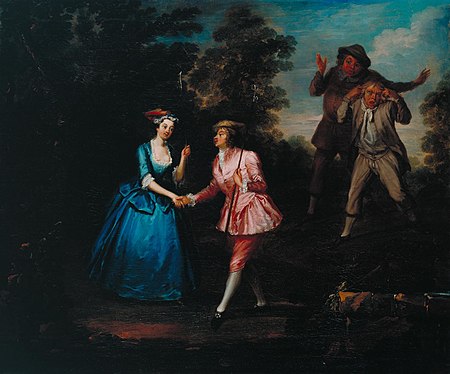

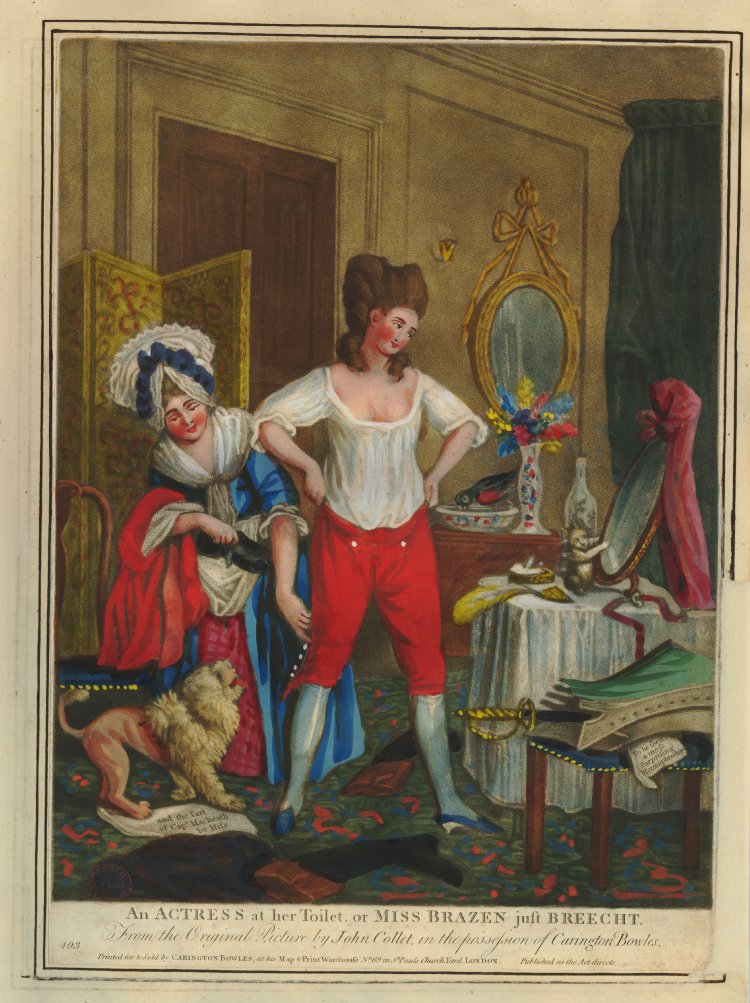
The majority of the roles that she played on stage were male, and apparently she was very good at impersonating young men, which for a time put a lot of work her way. Unfortunately, she also portrayed many of the bad habits associated with actors. She would drink to excess, gamble, and as a diary entry from someone who saw her in the local taverns states she, “disported herself with much ribald behaviour, course language and loose morals, to shame her sex“. It was around this time that she started to wear men’s clothes away from the stage. Work started to dry up due to her for boisterous behavior, which was described as “private misconduct.” Charlotte had become estranged from her husband Richard, upset by his costly gambling habits and frequent affairs. In 1737, he fled to Jamaica to escape his debts, and died shortly afterward, leaving Charlotte a single mother, with no income and a strained relationship with her powerful father. With little work on stage she was forced to do menial work and relied on handouts from former colleagues.
She was fortunate to get a job working with a touring company and by then was passing herself off as Mr Charles Brown. So convincing was she in both her on and off stage personas, that a wealthy heiress became romantically interested and followed her around the country attending every performance until Charlotte tactfully appraised her of the situation.

When the tour ended Charlotte found herself unemployed again and was living in abject poverty until she was approached to take on the role of Mr Punch at a new puppet theatre. It’s owner John Russell, recognised her abilities as a comic performer and she soon became skilled at working the complex stringed marionettes. After one short season, the theatre’s founder was arrested for debts and imprisoned in Newgate Prison, where he went mad and eventually died.
Armed with her new skill she tried to purchase the theatre’s chattels from Russell’s creditors but could not raise the necessary cash. Around 1747 she left London and travelled to Bristol performing as a strolling player. In 1750, Catherine married an actor named John Harman, despite her father’s aversion to him. During her stay in the west country she was once imprisoned alongside men as a vagabond actor, worked as a male pastry chef, and set herself up as a farmer. She also briefly ran a grocery store. Her work and business ventures often ended in failure as did her marriage to Harman.
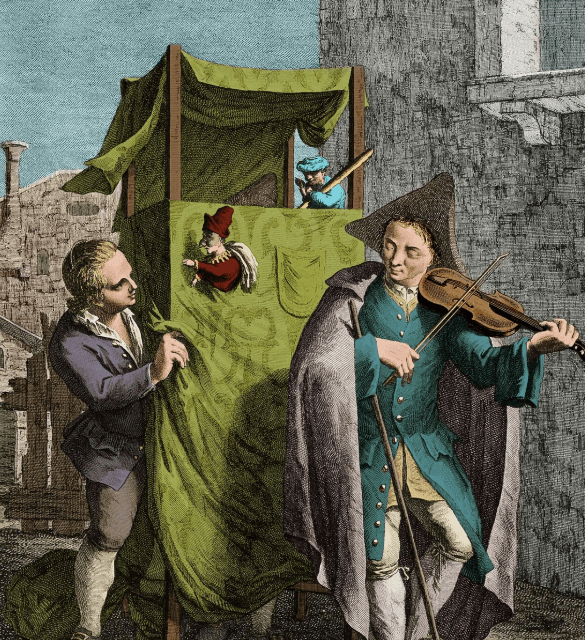
Despite all of these failures she seems to have been able to amass enough money to set up a puppet theatre of her own and trading on the now dead John Russell’s reputation opened Russell’s Puppet Theatre in the Great Room in Brewer Street North. Initially it was quite successful, but the genre, once playing to respectable audiences with refined dialogue and sumptuous scenery had descended into the slapstick routine we see today and was playing to a much less salubrious crowd on the streets and slowly her audiences drifted away.
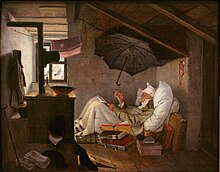
Charlotte was once again at a low ebb and it seems that her hard life had taken a toll on her ability to bounce back. Penniless and either refusing to contact her father for help or having been disowned by him, she moved into a small garret in the Great Room
Her appearance in the later stages of her life was described as “an unkempt middle aged man, attired in a goodly set of clothes, now a Beau Nasty” meaning finely dressed but dirty. She would stage impromptu performances in the Goswell Road along with her pet monkey for whatever passers by would put in her cap, but on many occasions she was chased off by the local constable or gangs of street children who openly mocked her shouting that she was a Draggle-tail or Fustilugs neither which are complimentary.
In April 1760, at the age of forty-seven, Charke fell ill with a “winter disease” probably influenza and was never able to recover from it, dying a month or so later. Her estranged family seemed to have been moved enough to give her a decent burial and while collecting her meagre belongings from the garret found that her only possessions or companions apart from her monkey had been a half feral Cat a one eyed Dog and a tame Magpie.
No mention was ever made as to where she was buried and her obituary in the newspapers was sparse in those that bothered to print one. The most fulsome stated “the celebrated Mrs. Charlotte Charke, Daughter of the late Colley Cibber, Esq., Poet Laureat; a Gentlewoman remarkable for her Adventures and Misfortunes.”

 A LONDON MISCELLANY
You do tell a good yarn Steve. Though in this case, a remarkably sad one.
LikeLiked by 1 person
Thanks Margaret. Yes it is a sad tale. Interesting if you take it in context with todays gender values
LikeLiked by 1 person
What a great story, well told, Steve! I must say that hilarious headline drew me in. ~Ed.
LikeLiked by 1 person
Thanks. Couldn’t think of anything shorter🤣
LikeLiked by 1 person
LOL. It’s perfect. Don’t know if you noticed, but I also reblogged this post.
LikeLiked by 1 person
Thanks
LikeLiked by 1 person