
I very rarely write about things outside of London, but I’m moved to do so today after a short midweek break. Actually, there is a London connection and also a link to two posts that I’ve made on here in the past, so I don’t think I’ve infringed my own draconian rules too badly.
Whilst looking for things to visit on our break, the lady of Miscellany Towers booked us a visit at an Artist’s community just outside Guildford in Surrey. The scones in the teashop seem to have attracted rave reviews, so I thought to myself, if the art turns out to be a load of pretentious toss then the day won’t have been entirely wasted and left it at that.

I thought no more about it until we were on route. Having to put the details into the Sat Nav, I’m told that the venue is called Watts Artist Village. Duly entered we set off and finally curiosity got the better of me and I had to ask what’s this place all about? It appears to be an artist colony within the grounds of a house and studio once lived in by the Victorian artist George Frederick Watts. OK I thought as I mused on the possible availability of different flavours of jam, but as we proceeded along Surrey’s pleasant byways the name kept nagging at me like toothache. I knew the name but couldn’t place where I’d heard it.
Arriving at the village having parked the car we made our way towards the house and the name keeps turning over in my head, but the answer is tantalisingly just out of reach. Finding a bench I had to sit down and put an end to this. My first thought was that he had crafted the statue of a dog mentioned in a previous post, but that wasn’t correct and so I turned to the fount of all knowledge true or otherwise, Wikipedia. All became clear, George Frederick Watts, the instigator of the monuments to Heroic Self Sacrifice in Postman’s Park near the Barbican in London

Keen to make up from my memory lapse, whilst being shown round his studio I told two guides who were telling us about his works, “oh yes and I believe he also commissioned the memorial in Postman’s Park”, one met with a noncommittal shrug and the other with a grudging, “I believe so”. Both got me disparaging looks from she who must…. Later I was to find another connection that was to have slipped my memory, that of a painting of Watts’ called Found Drowned, but I was dragged out of the gallery before I could tell anyone about it!
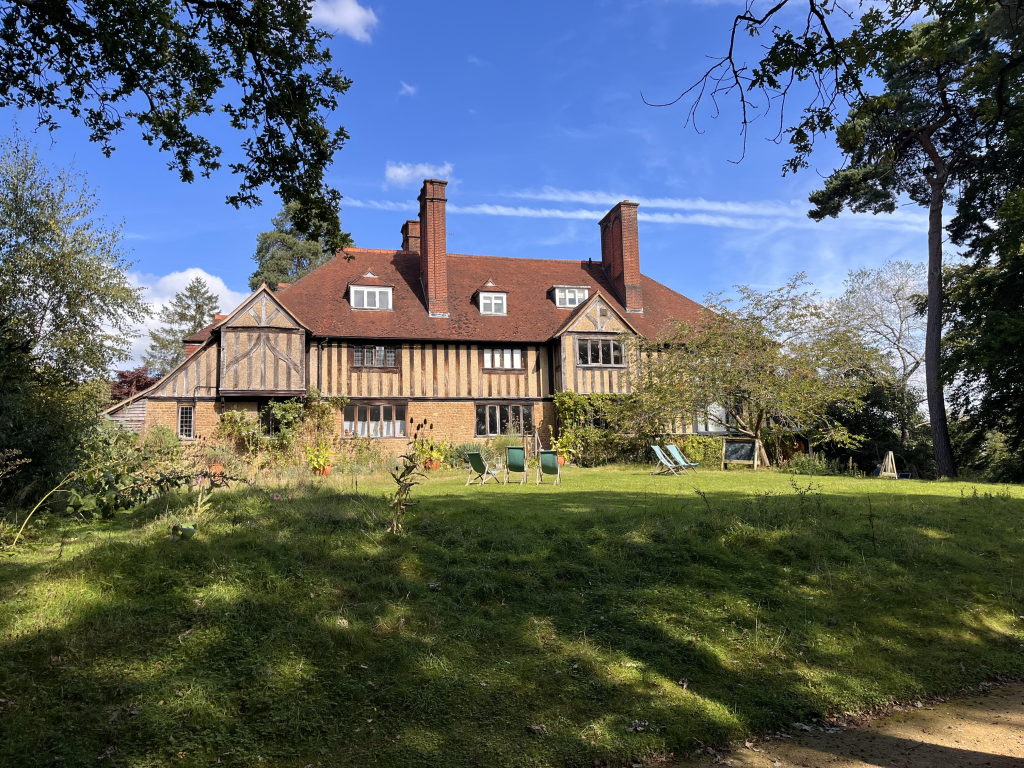
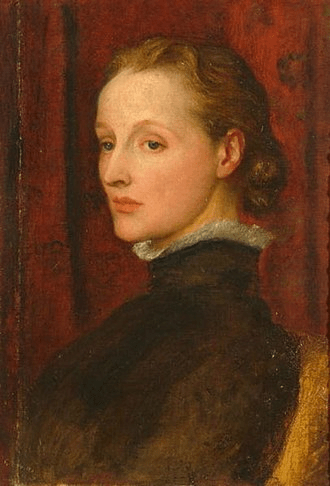
Anyway, back to the village itself. It’s a beautiful house which holds works by Watts, known during the Victorian age as the British Michelangelo as it seems he could turn his hand to anything creative. It was also the studio for his wife Mary Tytler a very outstanding artist in her own right. After Watts’ death in 1904 she set up a gallery to house his works in the grounds of the house, the only one in the Uk at the time dedicated to a single artist.
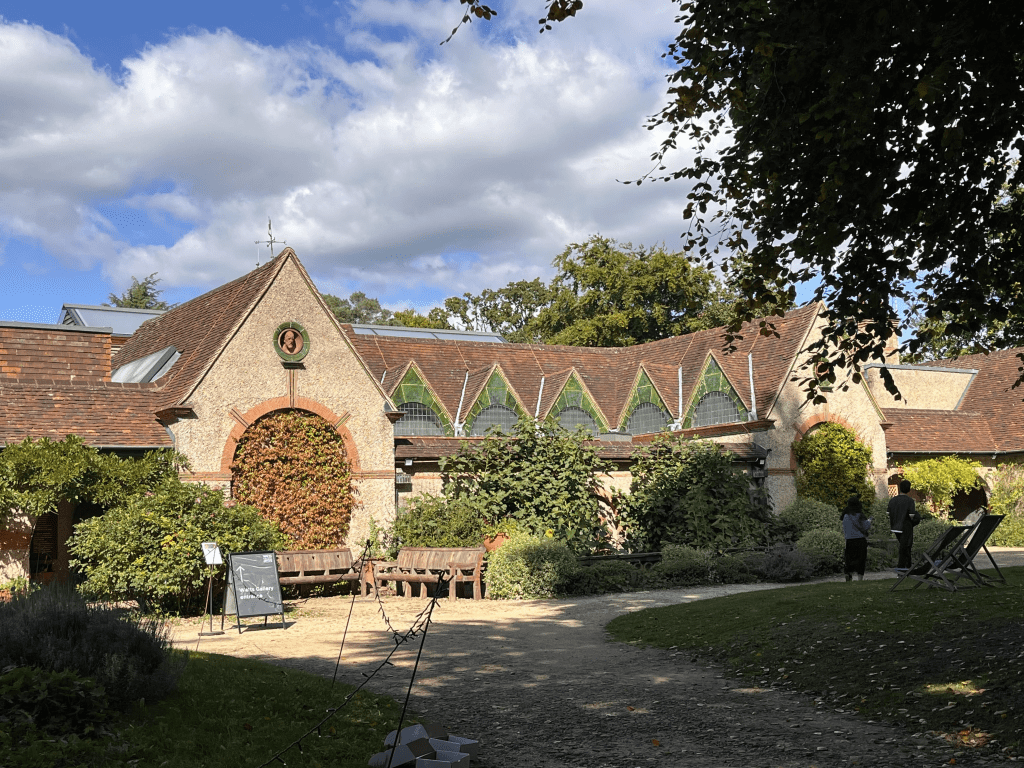
To my eye some of his later paintings were rather nice, but these paled against a project undertaken by his wife. A short walk from the house is the Watts Cemetery Chapel, designed by Mary, who along with local residents and craftsmen built this modern Art Nouveau mortuary chapel between 1896 to 1898.


It’s quiet a shock to follow the path through the tree to emerge in front of something so far removed from what you think a chapel is going to look like. Another surprise along the way was a grave in the cemetery, the last resting place of writer and philosopher Aldous Huxley. I’ve tried reading Brave New World twice and failed miserably, perhaps like old Aldous you need to be off your face on Mescalin to understand what’s going on. I do however know two bits of trivia about Huxley. Firstly his writing was a big influence on a young American man called Jim Morrison and the book, “The Doors Of Perception” spawned the name of Morrison’s band. The second is that as a venerated intellectual, Huxley’s demise would have been international news, but he had the misfortune to die on the 22nd November 1963, the same day that John F Kennedy was assassinated and his passing got barely a mention in the press and TV.

The biggest surprise however was the interior of the chapel. I won’t even attempt to describe it, I’ll let the next few pictures speak for themselves.


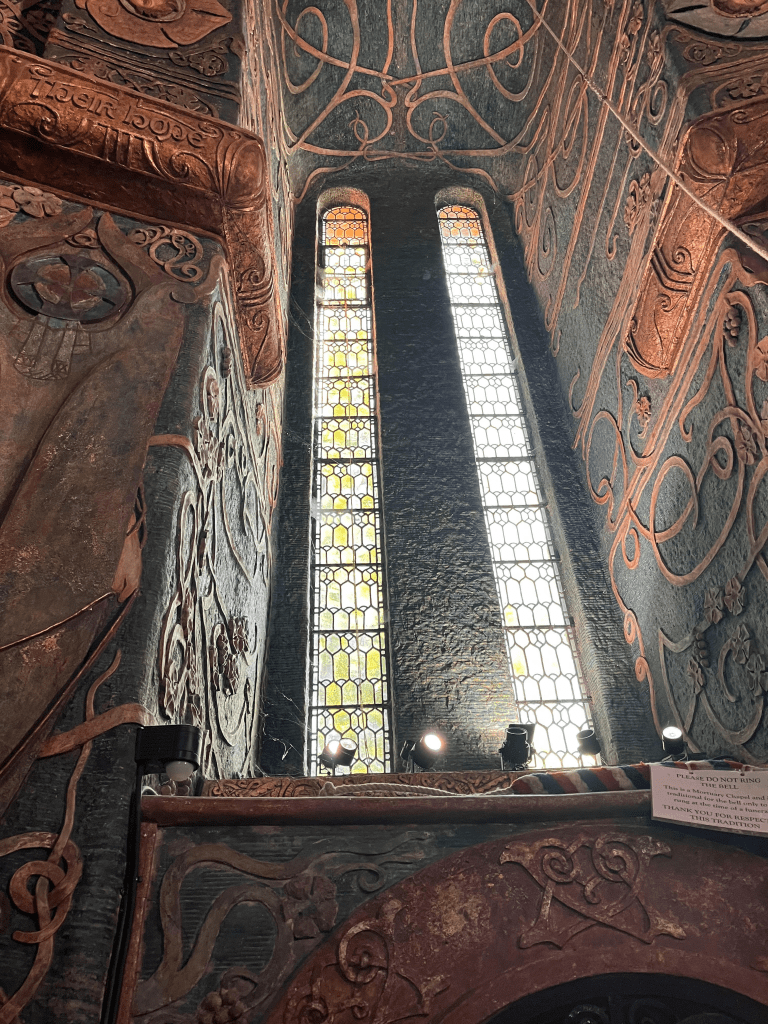
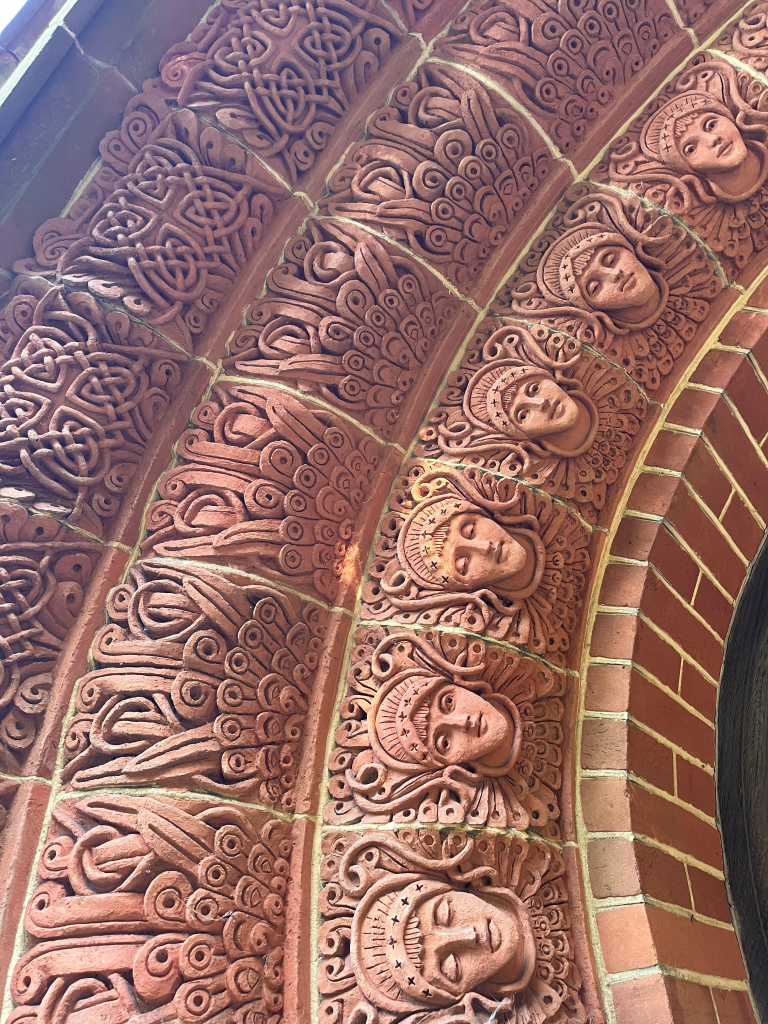

I can hear you thinking, well yes that’s all very nice and lovely, but what about the scones? So gobsmacked was I by the chapel interior I stayed for some time and when I eventually dragged myself away I found that the Tea Shop had sold out!

 A LONDON MISCELLANY
That chapel is quite something. As I believe your face must have been on learning there were no more scones.
LikeLiked by 2 people
Haha!
LikeLiked by 1 person
Yes, the bottom lip was well and truly sticking out.
LikeLiked by 1 person
Ah, the Watts gallery and above all, the chapel…have been a couple of times. That chapel is Quite Something. I didn’t know of the London connection, and also unaware of Huxley’s grave
LikeLiked by 1 person
It was definitely in the lucky find category. I was so pleased about the London connection as I could then write about it.
LikeLiked by 1 person
Wowuh!
LikeLike