Earlier this week I found myself in Wandsworth (I really am turning into a South Londonophile!). I was researching a tour I’m putting together that takes in a stretch of the Thames Path between Putney and Battersea Pleasure Gardens.

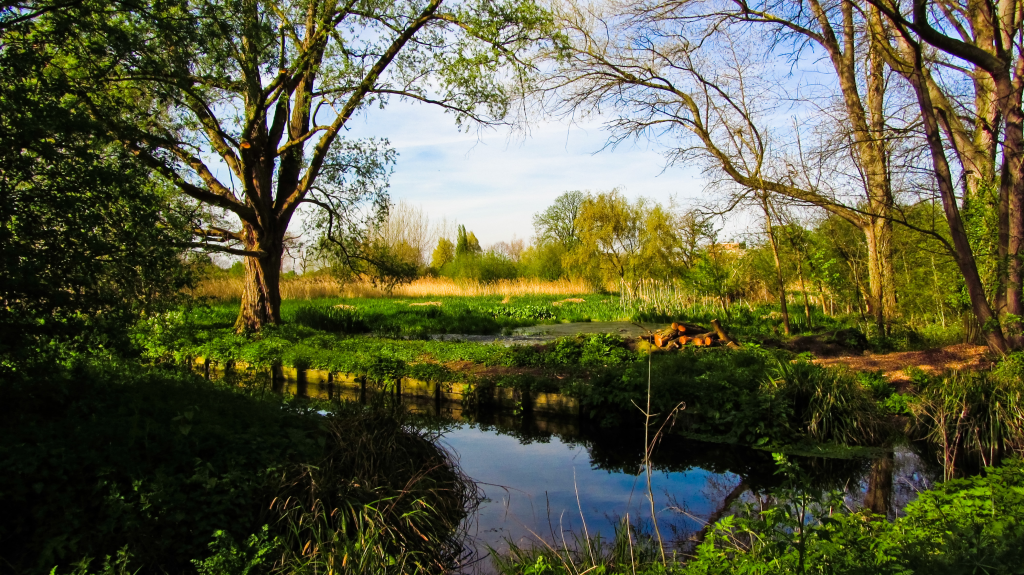
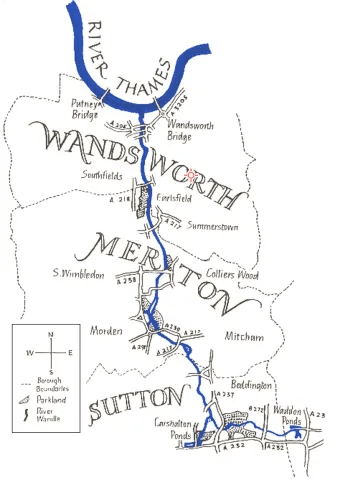
I was particularly keen to take a look at one of London’s rivers, the Wandle. Although not considered one of London’s lost rivers, those that over the centuries have been culverted and lost from view, it is only visible for short stretches of it’s nine mile or so journey from it’s source around Carshalton in Surrey to flow into the River Thames. The river by it’s name is linked to both the town of Wandsworth and borough from the Old English Wendelesorde. The sorde part meaning an enclosure or small settlement. The Wendle derivation probably being the landowner at the time, therefore meaning Wendle’s Enclosure.
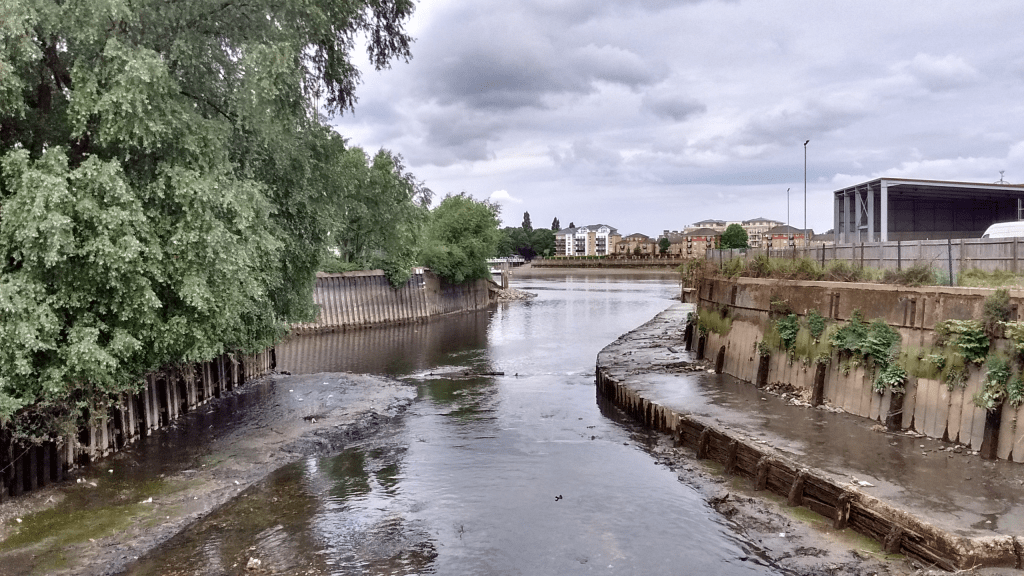
The part I wanted to see was the final stretch that flowed into the Thames. Apparently the river was very fast flowing along this stretch which made it ideal for watermills.
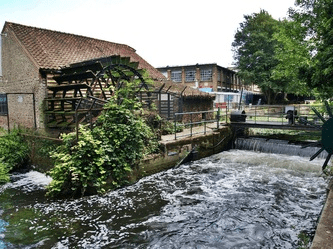
These over the centuries grew into huge concerns, processing, flour, paper and cloth, which really lead to the industrial nature of the area during the 19th century. However by the early part of the twentieth century they had all gone and the land was used to locate petroleum and gas works along with other rather noxious businesses.

A slightly more whimsical local business located here was known as the Amerce Factory. They were the only business in the UK licensed to make caps for toy guns. They also produced the snaps to go inside Christmas crackers.

By far the largest was the Wandsworth, Wimbledon & Epsom Gas Works. A hundred and twenty years ago it was the largest gas supplier in the UK. It even had its own fleet of vessels to bring coal from the mines of Northumbria to the Point Pleasant works. The flagship of the fleet was the SS Wandle named after the local river.
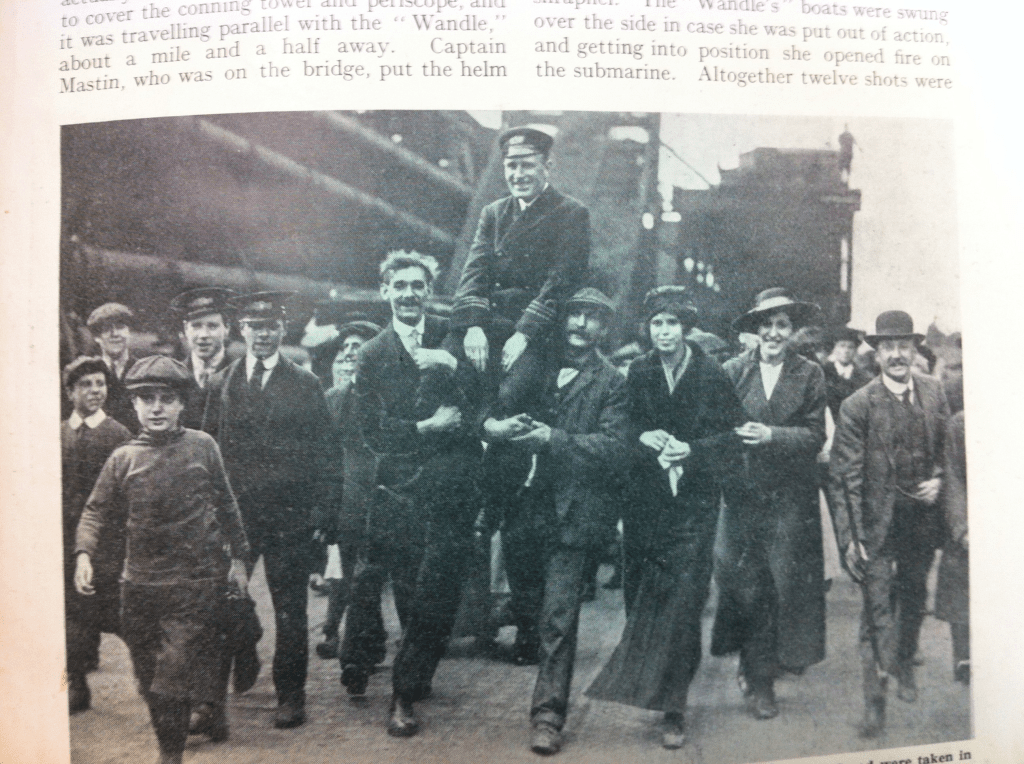
On the 29 April 1916 in the North Sea about 15 nautical miles south-east of Souter Point near Whitburn, County Durham, the Wandle was steaming southwards when it was attacked by a German submarine, UB-27 . The craft surfaced and opened fire with her deck gun at the collier. Instead of trying to evade the U Boat the Captain engaged the submarine with it’s own armaments and even tried to ram the German craft, sending it scurrying for safety beneath the waves.
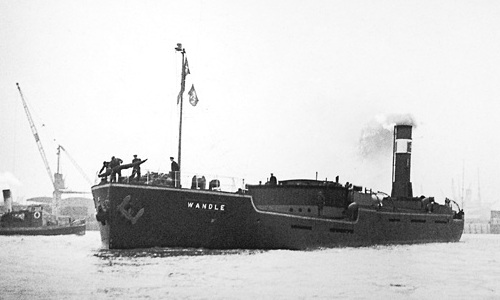
It appears that in receiving the report of the incident someone at the Gas works got their wires crossed and it was widely reported that the Wandle had actually sunk the submarine. On it’s return to the wharf the Captain and crew were hailed as hero’s and a small welcoming committee of dignitaries was waiting for them along with members of the press. Whoever took the message must have been pretty red faced when the Captain astonished and a little embarrassed by the welcome informed everyone of the true circumstances of the engagement. However, they all adjourned to a local pub to continue the celebrations. Never let the facts get in the way of a good story, specially during war time.
Carrying their own coal lowered prices to their gas consumers making it the cheapest in London. Not only did this benefit their residential customers, it also made the Gas Works the Mecca for an enthusiastic bunch of hobbyists. I’m not certain if Wandsworth today is hailed as a Mecca for anything, but back at the turn of the last century it became the UK’s go to location for Balloonists.
The cheap supply of gas from the WWEGW made the cost of flying achievable to many and on most days you could always spot a balloon in the sky over Wandsworth. It appears from the photo that they had their own gas dispensing pumps outside the factory and balloonists would fill up their storage containers prior to take off.


 A LONDON MISCELLANY
Ooh, I wish I were in London at the moment! I’d definitely join that tour.
LikeLiked by 1 person
What a great post for lesser known history
LikeLiked by 1 person