
I recently came across this story while researching a new audio tour around Southwark. I have to admit as a born and bred North Londoner I’m a bit sniffy about anything Souwf of the river, but I have to say that I was pleasantly surprised about what I turned up.
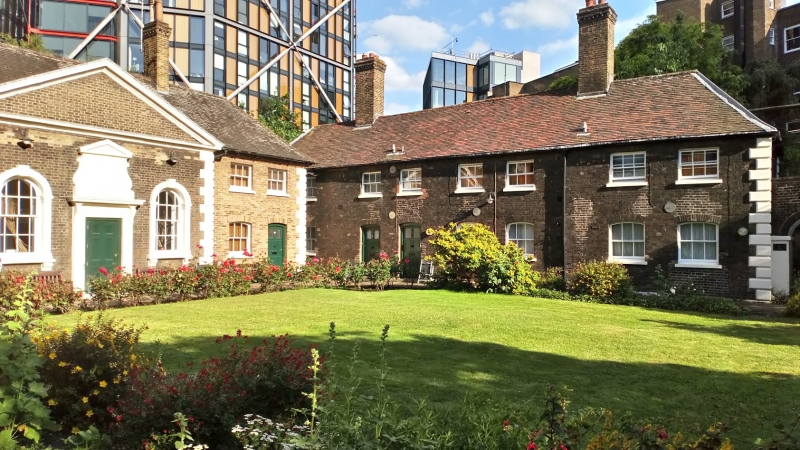
Hopton Street is situated between Blackfriars railway bridge and the Tate Modern at Bankside. It takes the name from a very beautiful collection of Almshouse’s, the money for which was bequeathed in the will of philanthropist Charles Hopton in 1731.
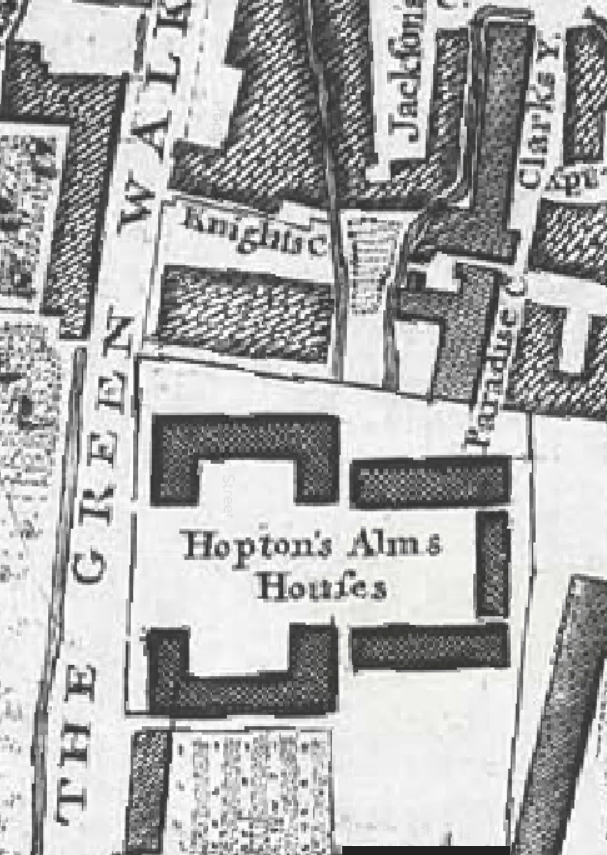
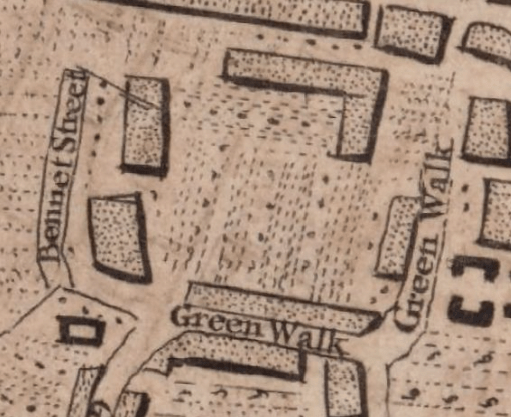
As you can see from the map of 1746 the street was then known as The Green Walk. However, in the mid to late 1600s it was for a short while called Holland Street. The reason for this can be found on the same map, as just up from the Alms Houses a street bordered the Green Walk known as Holland’s Leger or Leaguer. Leaguer was the term for a military encampment.

Had you ben a respectable resident of the area back in the early 1600s you would have spoken the name, Hollands Leger in hushed and disapproving tones, for at the end of the street sat a large moated manor house.

The area as a whole was known as Paris Gardens and it had something of a reputation for pleasure and debauchery. It’s believed that the Knights Templar originally owned the house and in the early part of the 17th century it was leased to and under the strict rule of Elizabeth “Bess” Holland. The Holland family that Bess had married into were the Elizabethan version of the Kray’s or the Richardson’s in the 1960s, a crime family who had a lot of fingers in a lot of pies.
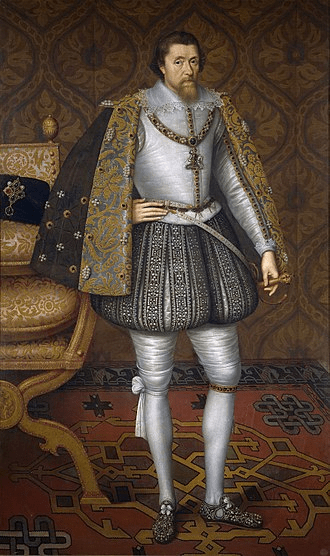
During Bess’ rule over the Bawdy House it was used as a bolthole by James I to get away from court life and it became a bit of a party house, James loved a party, the more outrageous the better. It seems that it was also a cosy rendezvous for James and George Villiers, the Duke of Buckingham, the Kings lover. Beth seems to have appeared on the scene around the time of James’ coronation and carried on running it after his death and the coronation of his son, Charles I.

She appears to have modelled it on a very famous Brothel located in Brussels, the Schoen Majken (The Lovely Little Maiden). It provided luxurious reception areas and bedrooms, good food and drink, clean linen and state of the art plumbing. It was said to only employ Dutch prostitutes, so it’s unclear if the name Hollands Leaguer came from them or Bess’ surname. There was the house itself and at the back well manicured lawns and gardens. The entrance had it’s own drawbridge, portcullis and was surrounded by a moat.
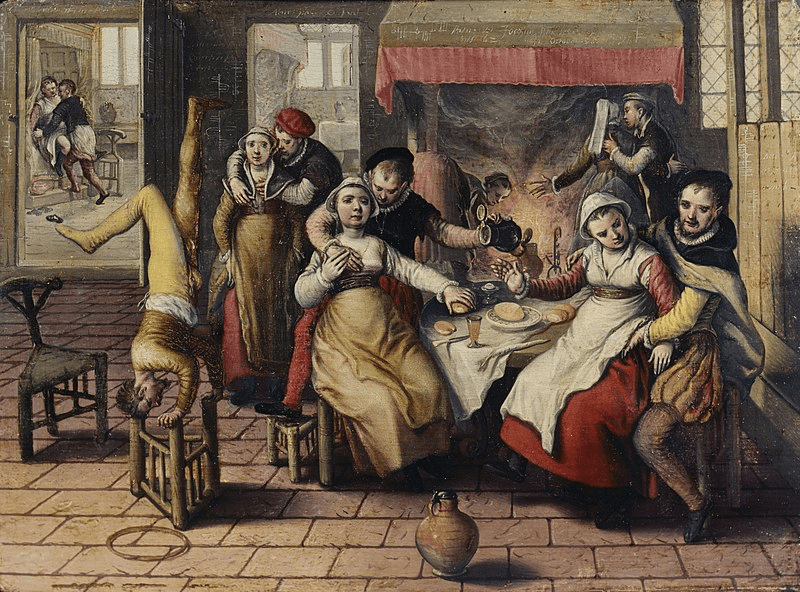
These precautions to ward of unwanted visitors were to come in handy. The story of the Southwark and Bankside Brothels, or Stews as they were known had been, since the time of Henry VIII stuck in a cycle of either persecution or blatant disregard by the authorities. Henry had instigated a crackdown on these establishments in the 1540s to try and limit the contraction of the Pox. No sooner had an establishment been closed down then it would reopen as a tavern or a Bathhouse offering certain extras to their clientele. The Bathhouses were probably where the name Stew comes from, as the water that needed to be heated was brought up to temperature on a stove, known in french as an Estuwes.
It appeared that Henry soon tired of the project and probably with a little coaxing from some of his courtiers turned his attention to other things. The land that most establishments sat on were owned by the Bishops of Winchester and provided a nice little earner in rents, therefore any clampdown over the intervening years were not in their interests and most of the closures were short lived affairs done to show their moral rectitude.

However, there was one element in society that took it upon themselves to give these establishments a hard time and that was the Apprentices. London ‘prentices as they were known had a long history of letting off steam on certain holidays during the year. This took many forms, the normal drunken lads day out, but it often ended up as wanton destruction and in some cases riot. Shrove Tuesday proved to be a popular day to vent their antagonism and Brothels and Theatres bore the brunt. In March 1617 over a hundred ‘prentices ransacked the newly opened Cockpit Theatre near Drury Lane and smashed windows in many nearby Brothels. Records show that there were at least one similar attack each year between 1603 and 1631.

1631 saw a large group of ‘prentices gather in Paris Fields after carousing in many of Southwark’s taverns and lay siege to Hollands Leaguer. They were thwarted somewhat by the defences and had to resort to throwing stones and insults at those safely inside, but they caused a lot of damage to the surrounding area and eventually the sheriff brought in man to disperse the angry crowd. The perpetrators generally went unpunished arguing that they had acted on moral grounds and were helping to clean up vice and corruption and it is thought that generally they had public support. This attack started the public debate that something should really be done about this sort of thing and it forced the authorities to start another wave of closures, however this time was different. Instead of the usual half hearted crackdown the authorities were forced to take more draconian measures as King Charles involved himself in the matter.
It’s unclear why the King involved himself particularly regarding Holland’s Leaguer, but in December 1631 he gave orders that the premises were to be raided and sent armed men to close it down. As the men, numbering around forty approached the house, the defenders were taken unaware and had no time to drop the portcullis, but did managed to bar the gate. As the militia stepped onto the drawbridge, Bess and her fellow defenders managed to raise it, causing those men upon it to fall into the moat. As they struggled to dry land the ladies of the house emptied the contents of their chamber pots on them from upstairs windows. There ensued a standoff which lasted well into January, when deprived of food and water the inhabitants surrendered.
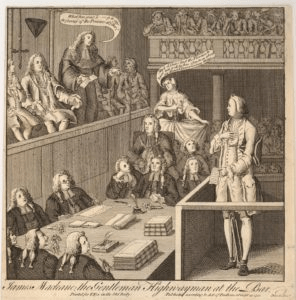
Bess was tried for being an “incontinent women”. She was charged with being a procuress, an early name for a woman who procures prostitutes, the forerunner of the term Madam. The House was ideally situated as she said at her trial to be “near the theatres and baiting rings, with their wild beasts and gladiators”, supplying a good source of both working girls and punters alike. She was found guilty and sentenced to be incarcerated. . The house is thought to have reverted back to the family of the original lessee, at the time Lord Carey, Earl of Dover and an MP. Probably wanting to disassociate himself with the whole affair it is thought that the property was left empty for many years. By 1761 the moat seems to have dissapeared and the layout has changed, also the lane known as Hollands Leaguer is now part of the Green Walk.
And as for Bess Holland? After a short term in Newgate Gaol served in rather good conditions due to her family connections, she was released and returned to Southwark where within weeks she had opened another Bawdy House, but this time not such a high profile one.

 A LONDON MISCELLANY
Don’t you dare get sniffy with those of us who pride ourselves on our Sahf of the river connections! As you see, we have just as much history, both salubrious and less so
LikeLiked by 1 person
Yes I now stand humbly and ashamedly corrected 🙂
LikeLiked by 1 person
🤣
LikeLike
Quite a history
LikeLiked by 1 person
A terrific history Thanks for sharing this .
LikeLiked by 1 person
Thank you for reading it. It’s surprising how one small line in a book can help lead you to a great story like this. I’d walked past the site of the house at least a dozen times without ever knowing
LikeLike