

Aficionados of Camberwick Green will all know that Windy Miller was definitely a single guy about town and I have long suspected that he knows more that he lets on about Mrs Honeyman’s baby (there’s never a mention of a Mr Honeyman). I believe that he is also familiar with some of the Green’s married ladies as well!

However, I refer to him as an adulterator and not an adulterer in the context of someone that adulterates something, that is takes something pure and adds other substances to it for nefarious means. One look at him tells you he’s a wrongun, don’t let the smock and cheery wave fool you, he’s running a one man criminal empire.
The reason for “Outing” him and others of his kind comes from a tour I’m currently writing called “Pop Goes The Weasel”. Part of the tour takes in Bunhill Fields which sits just without the boundary walls of the City of London and was a burial ground between 1665 and 1854. The name derives from “Bone hill”, which was possibly linked to occasional burials from Saxon times when the area was low lying moorland. However, it more probably derives from the mass deposit for human bones amounting to over 1,000 cartloads which were brought from St Paul’s charnel house in 1549 when that building was demolished.

The dried bones were deposited on the moor and capped with a thin layer of soil. This built up a hill across the otherwise damp, flat fenland to such a degree that three windmills could safely be erected in the area to take advantage of the elevation. These windmills were for the milling of grain, which is where Miller and his cohorts enter the story.

As a bit of context, I spent thirty years working in the Baking Industry and I’m familiar with the history of the Worshipful Company of Bakers since it’s inception in 1155. The Company which included members of the milling industry received the power to enforce regulations for baking, known as the Assize of Bread and Ale. The violations included selling short-weight bread and the addition of adulterants to the flour. Can you see where I’m going with this?
Fee-fi-fo-fum!
I smell the blood of an English man:
Be he alive, or be he dead,
I’ll grind his bones to make my bread.
There are many instances over the years of both Millers and Bakers being prosecuted for the addition of chalk to their flour. There were chalk pits as close to the London clay as Charlton six miles or so to the south, so it was a commodity that was readily available. For those millers who operated in chalk rich areas some would dig their own.
More gruesomely there are instances of Millers adulterating their flour with ground up bones. In The Domestic Chemist—Instructions for Detecting Adulteration, published anonymously in 1831 there is listed 48 substances said to have been used as adulterants. It reports to finding ground human bone, gypsum and alum in sacks of flour bought directly from a London Miller. Therefore, I would argue that some millers, especially those on top of a ready supply of bone like the millers of Bunhill Fields would succumb to the temptation of extending their profits with a plentiful raw material beneath their feet.
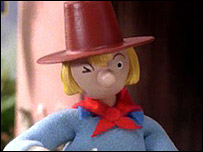
Therefore, Windy Miller, J’Accuse…!

 A LONDON MISCELLANY
Oh no, Steve. I’m not having this. Windy Miller is everyone’s favourite great uncle. He’s led a blameless life providing unadulterated flour to the good people of Trumptonshire. You spend too much of your time in charnel houses. Though, despite libelling our favourite miller, this is, as ever, a fascinating post.
LikeLiked by 1 person
Oh dear Margaret, I see he’s entangled you in his web of corruption with him charm, obviously sack of free flour have changed hands, beware of Millers bearing gifts 🙂
LikeLiked by 1 person
🤣
LikeLike
Well, who knew?
LikeLiked by 2 people
Peter Rogers clearly missed a trick by not making “Carry On Milling”.
LikeLiked by 1 person
Eeew, and people used to complain about finding a bit of mouse in their bread. That’s better than a ground up ancestor.
LikeLike