
I’ve been writing and publishing self guided audio tours for four years this month, not sure where all that time’s gone! Before that I used to host tours in person.
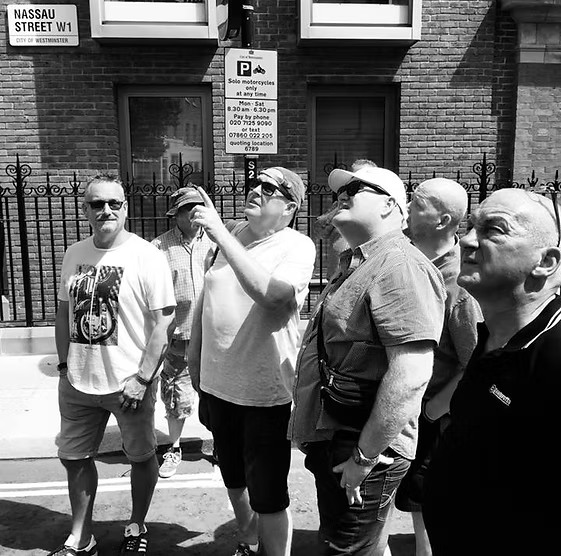
I really enjoyed meeting the people who came on the walks, but it did have it’s downside. The main object is to get the story you’re telling across to the listener, great in a quiet street, but try talking to twenty people on a road like Cannon Street and you’ll soon see it’s limitations. People in groups are usually rather reticent to stick their head above the parapet and ask questions and I sometimes got the feeling people wanted to know more but were afraid to ask.
That’s one of the reasons I switched to the immediacy and intimacy of the audio tour. I’m on a one to one basis with the listener, they can take the tour at their own pace and if they’re unsure about anything they can go back and listen again.
To date I’ve published nineteen self guided audio tours, with the twentieth being launched next month. Rather obsessively I plow on writing new tours keeping three or four on the drawing board at any one time, but recently I was struck with the need to revisit some of my earlier productions.
Things change so quickly in London, buildings appear and disappear with more regularity than you’d think. Alleys get closed to public access and whole streets become no go areas for months, so some tours fall foul of this and need editing. It also gives me a chance to add in things that I may have missed in the original draft. What follows is an example.
If you’re ever in the area around the Gherkin take a walk along Bury Street and at the end of Holland House and you will see the relief of a ship.
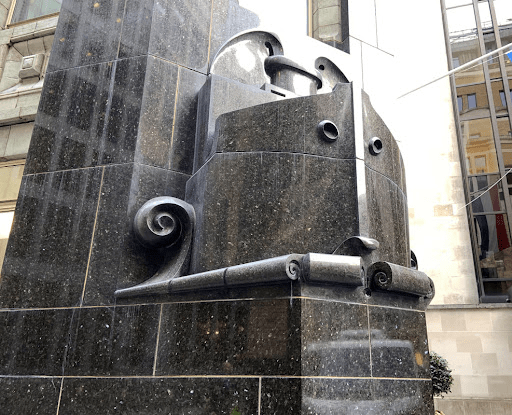
This dates to when the offices were owned by Wm. H. Müller who were a Dutch shipping company and commissioned the building in 1916.
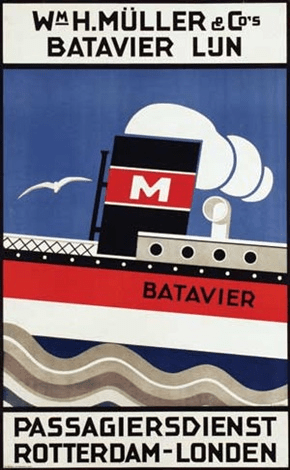
In itself a nice little fact and one that I recently included in an audio tour I produced called, Another Brick In The Wall. Bury Street as its known today is an unremarkable sort of street flanked on both sides by offices.

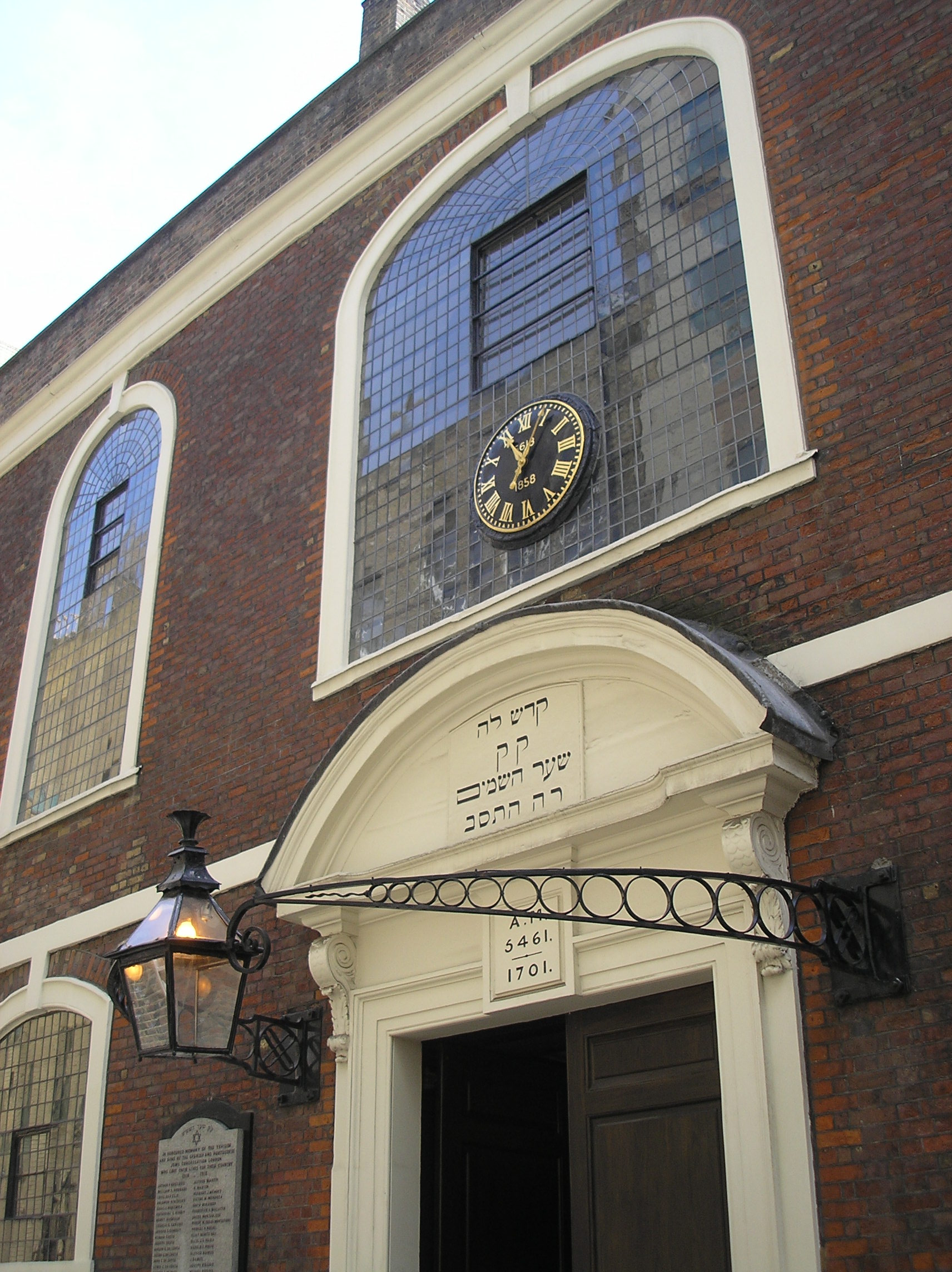
Sandwiched as it is between the very modern Gherkin and Beavis Marks Synagogue, the oldest synagogue in the UK, Bury Street has been around for a big part of the City of London’s history.
Its first appearance is on the Agas map of 1561 when it was known as Burye Street. The street and surrounding area was owned by the Bishop of Bury, hence the corruption of the name.
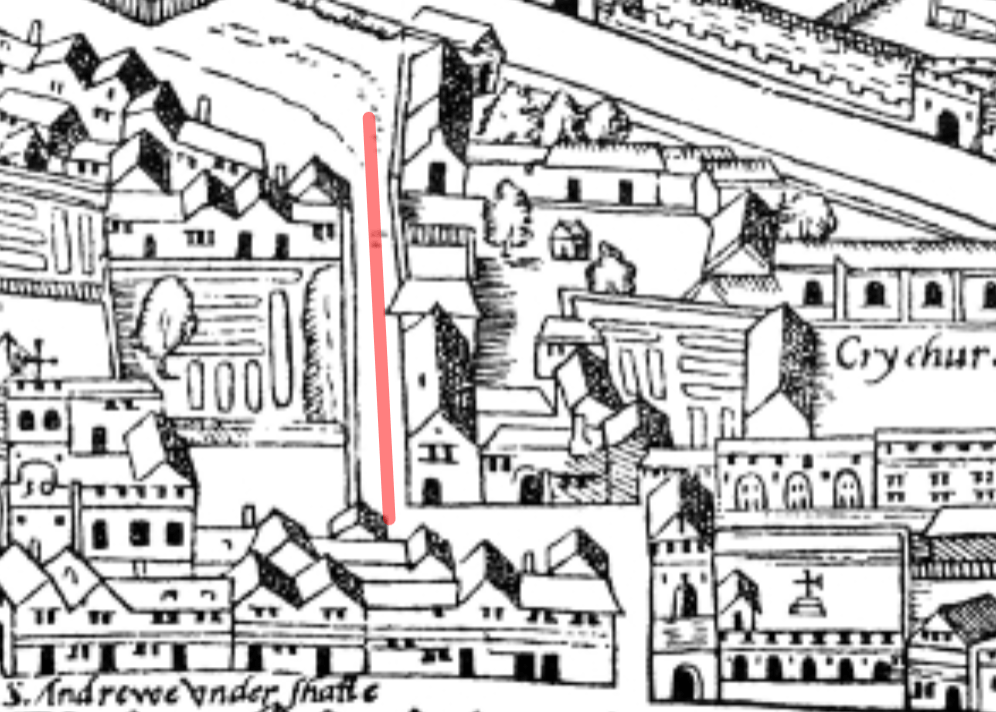
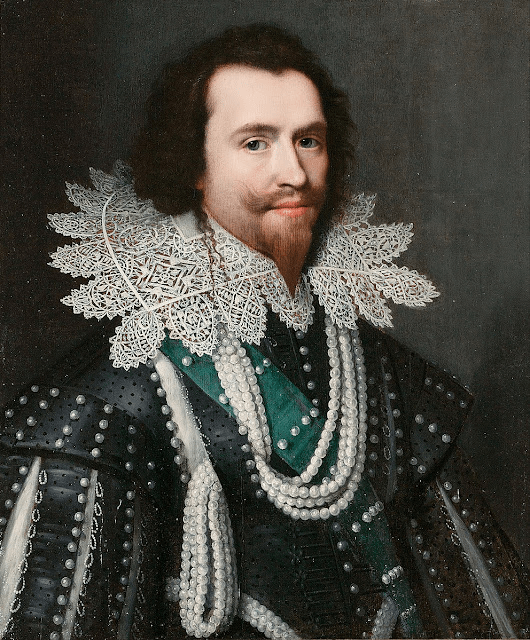
Documents show that Sir Thomas Englefield (1455-1514), who was the speaker in the House of Commons owned a “Messuage called the Taverne of the Kyngeshedd“, a Dwelling House known as the Kings Head which was situated within the street. After the dissolution of the Monasteries in 1541 the area passed into the Crowns ownership, but the street kept its ecclesiastical connection with the Bishop of Bury.
During the early 17th century the street is known as Berry Street and is shown later on John Rocque’s map of 1746.
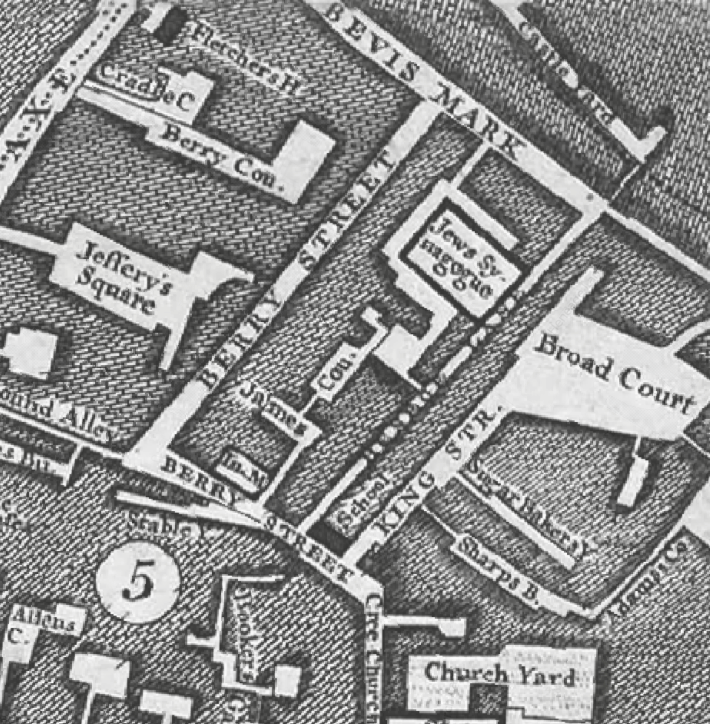
And it is to the early 1700s I turn during the audio tour to describe a very dark tale that took place around the environs of Bury Street in 1713.
The sad story that will always leave a dark stain on the area relates to a young child called John Pace. John was a four year old orphan who was cared for by an aunt. He had been dropped off at a School in Tower Street during the morning, but in the evening when his aunt called to collect him she was informed that he had already left. Returning home she found no sign of him and spent the rest of the night searching the district.
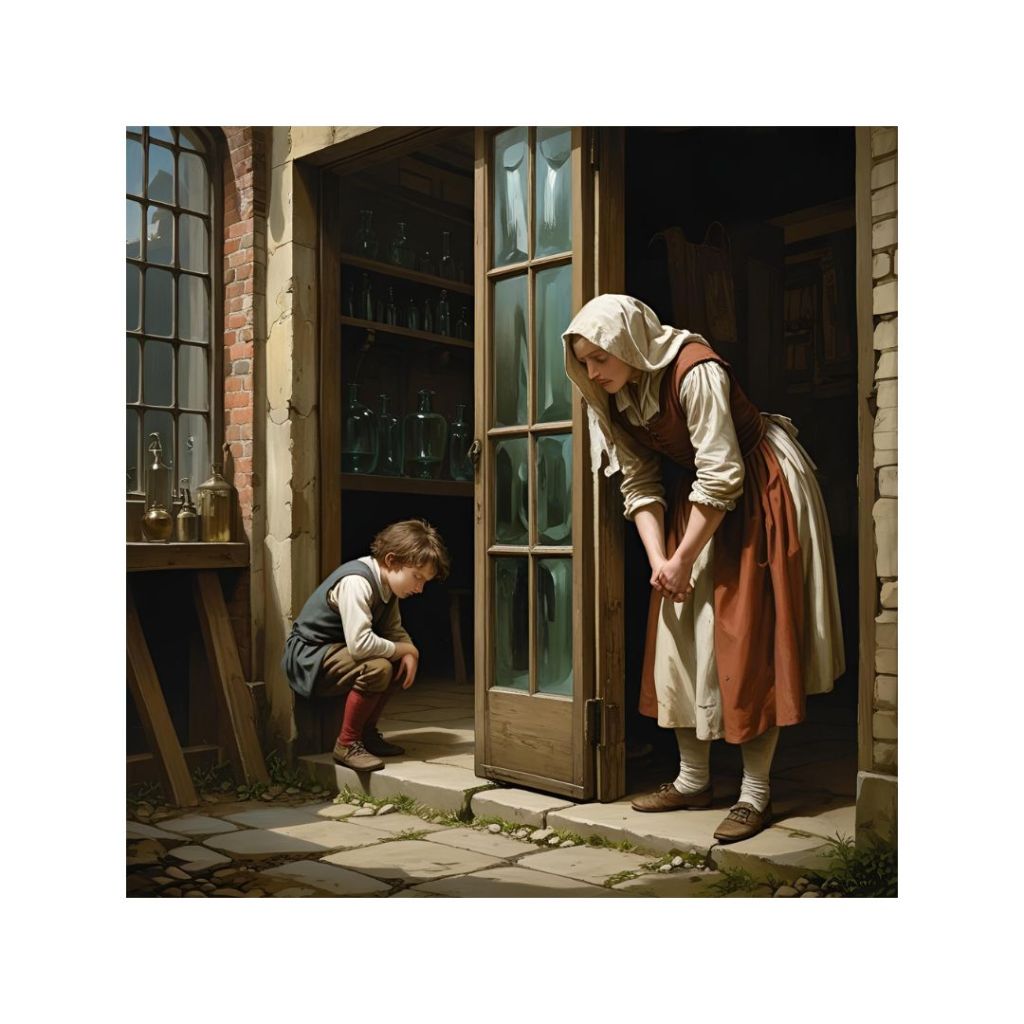
Apparently John had wandered off and got lost, and as night fell he went towards a Glass factory just east of the Aldgate to find a warm shelter. There he was found by Susan Perry who told others sheltering there that she knew his parents and would return him home.
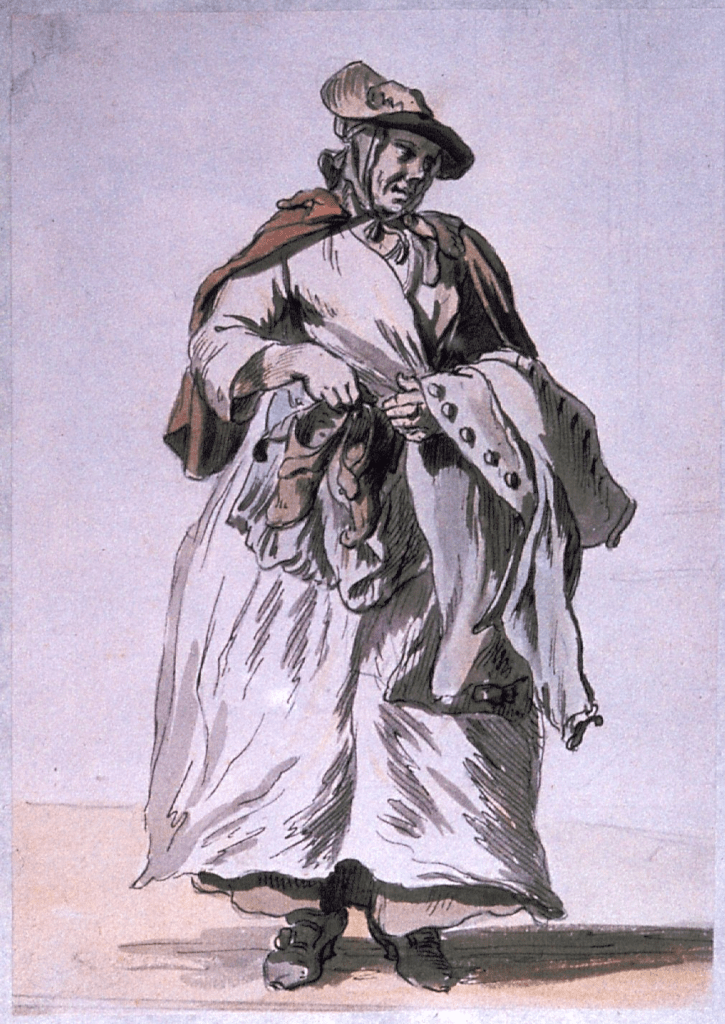
The following day, a Woman crying “Old Hats and Shoes”, observed Perry sitting on a doorstep in Berry Street mending her Apron with a Child’s Hat upon her Head, which she sold to the old clothes woman along with a Bodice-coat, Frock and Petticoat, for 9 d.
Travelling back down Leadenhall street the trader heard the news of a missing child being cried in the street, the description fitting some of the clothes that she had just purchased.
Immediately returning to Berry Street, Perry was found sitting in a doorway mending other items of child’s clothing. The trader seized her and called for a watchman, who took her before the justice. She admitted stripping the body of a dead child but refuted the charge of murder. Later that day a child’s naked body was found in the hounds ditch just off Berry Street. Death had been by strangulation and the aunt identified the body as being John Pace.
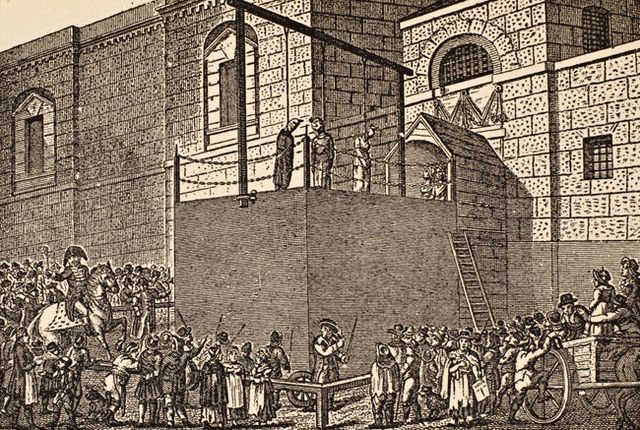
Perry was tried at the Old Bailey and found guilty of both Robbery and Murder, incarcerated at Newgate Prison where she was hung in February 1713.

 A LONDON MISCELLANY
What a gruesome tale. But I must investigate your audio tours ahead of my next visit to London.
LikeLiked by 1 person
What a gruesome little tale…
LikeLike