Browsing through a volume on London history I came across a word “Cnihtengild“, a typo obviously, but no just my ignorance.
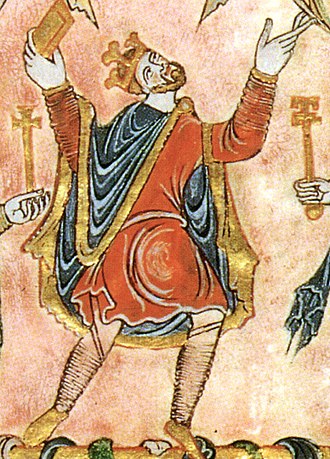
also known as Edgar the peaceful
The Cnihtengild (Knights Guild) was a body of thirteen Knights who were granted the land lying to the east of Aldgate and Bishopsgate in the 10th century by King Edgar. The parcel of land was known as Portsoken and measured around 5 hectares in area and was given to the Knights in return for them organising regular jousting tournaments.
The guild was made up of Knights and soldiers who were “welbeloved to the king and realme, for service by them done“. The guild were allegedly responsible for the creation of St Botolph’s church at Aldgate, sometime before 1115 and the decedents of the original Knights are named in conjunction with the custodianship of the church, “Radulphus Fitzalgod, Wilmarde le Deuereshe, Orgare le Prude, Edward Hupcornehill, Blackstanus, and Alwine his kinsman, and Robert his brother, the sonnes of Leafstanus the Goldsmith, Wiso his sonne, Hugh Fitzvulgar and Algare Secusme“.

The land set aside for jousting continued to be used until the knights gave the land to the Austin friars of Holy Trinity Priory at Aldgate in 1108 for the monks to use as a garden. The land reverted to the crown in the 1530s and was divided up and sold to courtiers and merchants and by the 1700s was covered by houses and workshops

The area today is known as Devonshire Square with part of it named Cutlers Garden which is owned by the Standard Life Insurance Company. In 1989 they commissioned a statue by Denys Mitchell which was unveiled in 1990 celebrating the origins of the the land that the gardens sit upon.


 A LONDON MISCELLANY
Interesting that medieval English at that time had still retained the Germanic (Saxon?) form of the plural, „-en“ …
LikeLiked by 1 person
Yes it is, I’m no expert on languages but there does seem to be a marked difference between words and spelling pre and post Norman conquest. I suppose the same words just evolved over time. Although if you look at Tudor street names some of them do have a Germanic ring to them, especially the word Street, spelt Strete, and I’m reliably informed pronounces Straita a little bit similar to Strassa or Straat.
LikeLike
Your post actually made me look up the etymology of „knight“ — the medieval word for servant or boy, „cniht“ (here of course referring to a servant to the king; with the „i“ sounding more like an „e“ and the „h“ pronounced like in the Scottish take on certain words spelled with a „gh“ that is silent in standard English, e.g., „night“) is related to a German word for a menial servant still very much in use 100 or so years ago, „Knecht“, and which even in modern German has virtually the same pronunciation as the medieval English „cnight“.
It‘s a male word, though (with no direct female equivalent); the plural is KnechtE — „-en“, like in „cnighten“, is a plural typically found in female and some neuter (3d German genus) words, or at least it is today.
And, yes, „strete“ / „straat“ / „Straße“ makes perfect sense, too, of course … pronunciation and all!
Linguistics are fascinating, aren‘t they? 🙂
LikeLiked by 1 person
They are fascinating and some great facts you’ve unearthed there, thanks for sharing them
LikeLiked by 1 person